

Table of Contents
What is Organic Food?
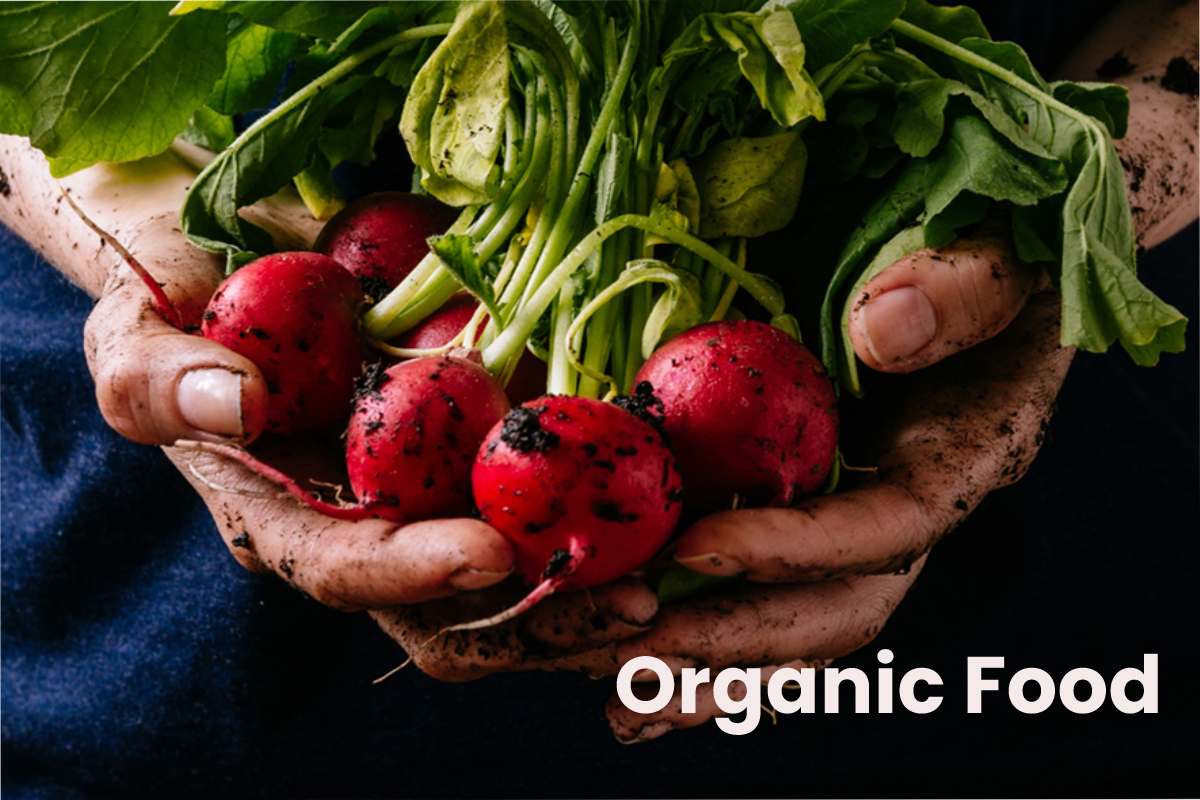
Organic food is produced under certified standards that restrict most synthetic pesticides, chemical fertilizers, GMOs, and non‑therapeutic antibiotics or growth hormones in livestock. Instead, farmers rely on crop rotation, compost, biological pest control, and animal‑welfare‑oriented practices to manage soil and livestock.
In many countries, “organic” labels (such as USDA Organic, EU Organic, or India’s NPOP/Participatory Guarantee System) are regulated and require third‑party inspection. To help users, the article should clearly distinguish true certified organic from “natural” or “eco‑friendly” claims, which are not legally controlled.
Why people Buy Organic Food
Common reasons consumers choose organic include concerns about pesticide residues, animal welfare, environmental impact, and perceived health benefits. Parents often cite children’s sensitivity to chemicals when buying organic milk, fruits, and snacks.
Other motivations include avoiding GMOs, supporting local or small‑scale farms, and trusting systems that audit animal‑rearing conditions and soil health. On the flip side, some shoppers avoid organic because of higher prices, limited availability, or confusion about what “certified” actually guarantees.
Health benefits: What the research says
Recent overviews of organic and conventional food show that organic often has lower pesticide‑residue levels and slightly different nutrient profiles, but clinical outcomes are more nuanced. A 2023 umbrella review of cohort studies found modestly lower risks for certain chronic diseases among people who eat more organic food, but confounding factors (such as overall diet quality and lifestyle) complicate cause‑and‑effect claims.
Organic meat and dairy may have higher levels of certain beneficial fats (for example, omega‑3s) because of pasture‑based feeding, though the absolute difference is small within typical diets. The evidence for “organic = dramatically healthier” is weak; the bigger health gains usually come from eating more fruits, vegetables, whole grains, and less ultra‑processed food—whether organic or not
Environmental and ethical impacts
Organic farming typically uses fewer synthetic inputs, which can reduce groundwater contamination from nitrates and pesticides and supports greater on‑farm biodiversity. Organic systems often rely more on crop rotation and cover crops, which help build soil organic matter and carbon sequestration over time.
However, organic yields per hectare are often lower than conventional in many crops, which can mean more land is needed to produce the same amount of food—a trade‑off for climate and habitat. On the animal side, organic standards usually require better welfare conditions (more space, outdoor access, non‑routine antibiotics), which many consumers value even if prices are higher.
Organic vs conventional: A quick comparison
| Aspect | Organic food | Conventional food |
| Chemical inputs | Limited synthetic pesticides/fertilizers | More synthetic inputs allowed |
| GMOs | Not permitted in certified organic | Often allowed (varies by country) |
| Antibiotics in animals | Restricted, mainly for treatment | Routine growth‑promoting use common in some regions |
| Price | Often 20–50% higher | Generally lower cost |
| Evidence for health | Modest benefits, mixed evidence | No major inherent health “risk” vs organic |
Organic Food Stores
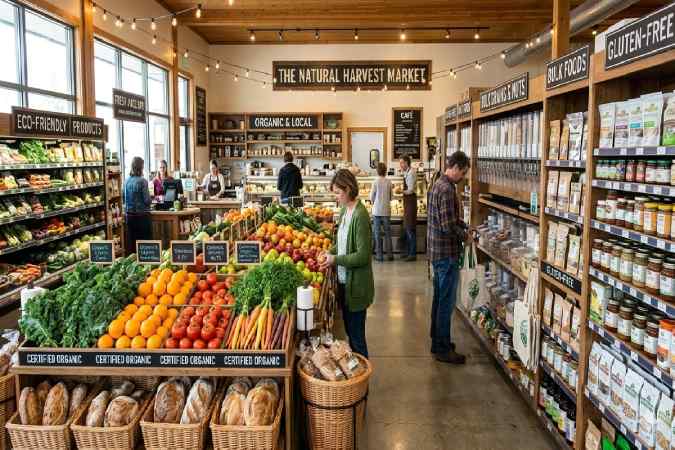
The Organic food stores specialize in certified organic produce, pantry staples, personal care, and prepared foods, often with delivery or pickup options. Given your location in Lal Bahadur Nagar, Telangana, India, here are highly rated nearby options from map searches, plus popular global chains for reference.
Top Organic Food Stores Table
| Store Name | Address (Hyderabad Area) | Rating/Reviews | Hours (Today, Fri Mar 6) | Key Features | Website/Phone |
| Pureland Harvests | Plot No 24, Narsimha Swamy Temple Rd, SKD Nagar, Hari Hara Puram, B.N Reddy Nagar, Hyderabad, Telangana 500070 | 5.0 (64) | 10:00am – 9:00pm | Organic farm-fresh produce, delivery available | purelandharvests.com +91 88866 69328 |
| Universal Super Foods – Karmanghat | Shop 2, Ground floor, Gayatri nagar, 8-147 X Rd, opp. Axis Bank, Mytripuram, Kharmanghat, Hyderabad 500079 | 4.9 (77) | 11:00am – 11:00pm | Dry fruits, honey, wellness items; curbside pickup, Wi-Fi | universal-super-foods.grexa.site +91 99665 66381 |
| Living Earth Organics | 97, Rd Number 16, Alkapuri Colony, RK Puram, Snehapuri Colony, Kothapet, Hyderabad 500068 | 4.9 (28) | 7:00am – 10:00pm | Wide organic selection, delivery | livingearth.in +91 87903 61510 |
| Wellness Hub | Rd Number 13, opp. Delhi Mithaiwala, Snehapuri Colony, Nagole, Hyderabad 500102 | 5.0 (20) | 10:00am – 9:00pm | Millets, ghee, oils, ayurvedic; no-contact delivery, Wi-Fi | wellnesshubonline.in +91 80194 91971 |
Global Chains (US Examples)
| Store Name | Location Example | Rating | Key Features | Website |
| Whole Foods Market | 225 Lincoln Blvd, Venice, CA 90291 | 4.4 (2602) | Organic groceries, salad bar, bakery | wholefoodsmarket.com |
| Erewhon Grove | 7660 Beverly Blvd A, Los Angeles, CA 90036 | 4.1 (1577) | Upscale organic, sustainable prepared foods | erewhonmarket.com |
Use Google Maps or store sites for exact directions, current stock, and deals near Lal Bahadur Nagar.
FAQ section
What does “organic food” actually mean?
Organic food is produced under standards that limit synthetic pesticides, fertilizers, GMOs, and non‑therapeutic antibiotics, with certification and inspections in most countries.
Is organic food healthier than conventional?
Studies show modest advantages in some nutrient profiles and lower pesticide residues, but the biggest health gains come from overall diet quality, not just choosing organic.
Is organic always worth the extra cost?
Not always. It often makes sense for frequently eaten produce, dairy, and eggs, but less so for low‑residue items or highly processed “organic” snacks.
How can I tell if a product is truly organic?
Look for an official certification logo plus the name of the certifying body on the label; avoid relying only on words like “natural” or “pesticide‑free.”
Does organic farming protect the environment?
Organic tends to reduce synthetic inputs and can support soil health and biodiversity, but lower yields may require more land, creating a trade‑off.
Conclusion
Organic food offers meaningful but often incremental benefits for health, environment, and animal welfare, especially when targeted to specific categories and shopping habits. By understanding what “organic” really covers, checking labels rigorously, and balancing certified organic choices with overall diet quality, readers can use organic food strategically instead of blindly chasing labels—making organic food a smart, informed part of a healthier lifestyle rather than a magic solution.