

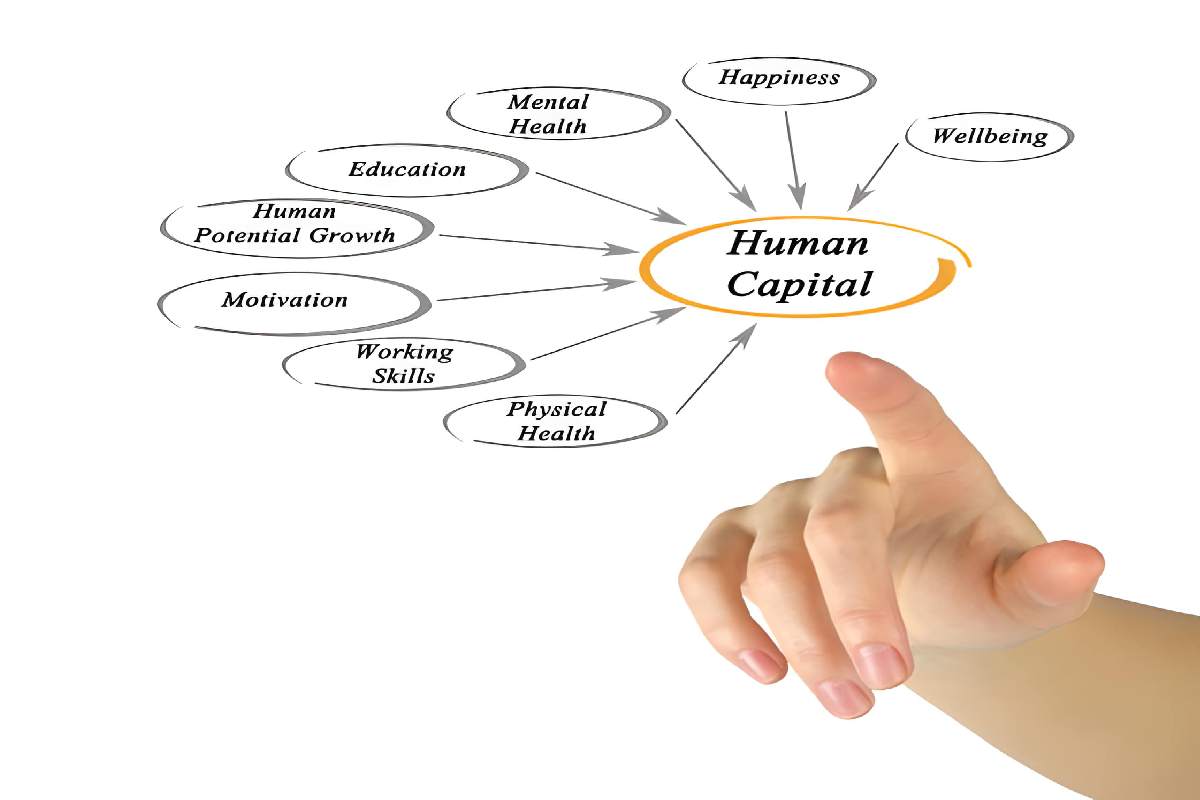
Health is the foundation of the human capital formation in that it turns individuals into skilled and productive contributors in economic growth, who are no longer just workers. Modern economies are driven by human capital, knowledge, skills and abilities that are developed in education, training and health and, where healthy populations produce 25-40% superior GDP per capita compared to unhealthy populations. With an aging world that will depend on technology in 2026, health investments will be ROI of 4-10 per dollar invested, implying that it is priority number one in the list of nations such as India aiming to become a $10T economy.
Table of Contents
Defining Human Capital Formation & Health
Human capital formation is the process that enhances the quality of workforce with regard to education, training of skills, migration and most important, health. According to Economist Theodore Schultz (1961), it was the stock of skills, competencies and health vested in individuals.
Health’s multiplier effect:
-
Health’s multiplier effect: Increased Productivity: Health workers get to maximum productivity, which is 20-30 productivity.
-
Risk of less liability: Unhealthy citizens strain healthcare systems, absenteeism cost, is 1685/worker/year (US statistics) Quality of Life: Makes work efficient, contribution in society.
Mechanisms:
-
Physical Capacity: Stronger bodies sustain longer hours, heavier workloads
-
Cognitive Function: Nutrition/illness-free brains learn 15-25% faster
-
Longevity: Healthy life expectancy adds 5-10 productive years
Economic Mechanisms: How Health Drives Human Capital
1. Productivity Enhancement
Healthy populations exhibit:
-
15-25% higher labor productivity (World Bank)
-
Reduced Absenteeism: 3-5 fewer sick days/year
-
Presenteeism Gains: 20% less “at-work but unproductive” time
Case Study: Jamaica RCT (1960s-1980s): Early childhood nutrition/health intervention boosted adult earnings 25%+ two decades later
2. Education Synergy
Health unlocks learning:
| Health Factor | Education Impact | Economic Return |
|---|---|---|
| Malnutrition | -10 IQ points | $1T global GDP loss |
| Deworming | +0.8 years schooling | $30 ROI/dollar |
| Vaccination | +25% enrollment | 44% wage premium |
India Example: Mid-Day Meal Scheme raised enrollment 12%, completion 5%
3. Lifecycle Accumulation
Health compounds across life stages:
| Life Stage | Health Investment | Human Capital Gain |
|---|---|---|
| Prenatal | Iron/folate | +15% cognitive skills |
| Childhood | Vaccination/nutrition | +20% future earnings |
| Adulthood | Preventive care | +10 productive years |
| Elderly | Chronic management | +$50K lifetime value |
Global Evidence: Health’s GDP Multiplier
Cross-Country Analysis (Bloom et al., 2004):
-
1 year ↑ life expectancy = 4% ↑ GDP/capita
-
East Asia Miracle: Health investments explained 25% growth (1965-1990)
Human Capital Index (HCI) 2020 (World Bank):
| Top Performers | HCI Score | Health Contribution |
|---|---|---|
| Singapore | 0.88 | Total coverage. |
| Japan | 0.85 | Longevity (84 years) |
| India (Rank 107) | 0.49 | dragons Malnutrition. |
India Context: 42% stunting rate erodes $20-30B GDP annually; Ayushman Bharat covers 500M but needs nutrition focus.
Micro-Level Impacts: Individual Returns
RCT Evidence:
-
Kenya Deworming: +14% earnings/hour worked
-
India ICDS: Malnourished children earn 20% less as adults
-
Philippines Nutrition: +$5.4 ROI per $1 invested
Wage Premiums:
| Health Status | Wage Premium | Mechanism |
|---|---|---|
| Healthy BMI | +12% | Energy, stamina |
| No chronic disease | +18% | Consistent attendance |
| High cognitive health | +25% | Problem-solving |
Macro Policy Framework: Health as Investment
Gary Becker Model (1964): Treat health as capital stock depreciating with age, replenished by medical care/nutrition.
ROI Calculations:
Health Expenditure → Improved Health Stock → ↑ Productivity/Education ↓ GDP Growth (7-12% multiplier)
India’s Human Capital Challenge:
| Metric | India 2026 | Global Benchmark |
|---|---|---|
| Life Expectancy | 71 years | 77 years |
| Stunting | 35% | <10% |
| Health Spend | 2.1% GDP | 6-10% OECD |
| HCI Score | 0.49 | 0.75 (top quartile) |
Government Initiatives:
-
Ayushman Bharat: ₹5L coverage/500M people
-
POSHAN Abhiyaan: Targets stunting reduction
-
PM-JAY: 20M hospitalizations covered annually
Sectoral Impacts: Health-Human Capital Linkages
1. Agriculture (India: 42% Workforce)
-
Malaria Reduction: +15% farm output (Rwanda)
-
Nutrition: Healthy laborers 20% more efficient
2. Manufacturing
-
Factory Health: +12% productivity (Mexico maquiladoras)
-
Absenteeism: Costs 3-5% output
3. Services/IT (India’s Growth Engine)
-
Cognitive Health: Software engineers 25% faster debugging
-
Mental Health: $1T global productivity loss
Gender Dimensions: Women’s Health Crucial
India Gender Gap:
-
Maternal Mortality: 97/100K births → lost human capital
-
Anemia (57% women): -15% work capacity
-
Closing Gap: +$770B GDP by 2025 (McKinsey)
ROI Example: Iron supplementation → +10% female LFPR → $12B GDP boost
2026 Global Trends & Challenges
Emerging Health-Human Capital Frontiers
| Trend | Impact | Policy Need |
|---|---|---|
| Mental Health | $16T global loss by 2030 | Corporate wellness mandates |
| Aging Populations | 2B over 60 by 2050 | Lifelong health capital |
| AI/Tech Jobs | Cognitive health premium | Neuroprotection programs |
| Climate Health | Heat stress -5% productivity | Adaptation infrastructure |
Post-Pandemic Reset: COVID accelerated $4.5T health investment gap; India’s $10B vaccination drive preserved 5% GDP.
Investment Framework: Maximizing Returns
Health Capital Production Function:
HC = f(Education, Health, Nutrition, Experience) ∂HC/∂Health > ∂HC/∂Education (early life)
Optimal Allocation (Bloom & Canning):
0-5 years: 40% health 6-15 years: 30% health + 50% education Adult: 20% preventive health
India Policy Priorities 2026:
-
Nutrition Security: POSHAN 2.0 → <20% stunting
-
Universal Primary Care: 75,000 Health Centres
-
Mental Health Integration: NIMHANS model scale-up
-
Corporate Wellness: Mandatory 1% payroll health spend
Case Studies: Success Stories
1. Kerala’s Health Model
-
Life Expectancy: 75.1 years (national 71)
-
HCI Equivalent: Top 20 globally
-
Multiplier: 1.8x productivity vs. Bihar
2. Vietnam’s Health Leap
-
1990-2020: Life expectancy +12 years
-
GDP Growth: +7.5% annual (health explained 2%)
-
Mechanism: Universal insurance + nutrition
3. Corporate ROI: Google
-
$1B wellness spend → $3.5B productivity gain
-
Mental health: +20% retention
Challenges & Barriers
| Barrier | Economic Cost | Solution |
|---|---|---|
| Malnutrition | $20B India GDP | Poshan Abhiyaan scale |
| Access Gaps | 30% rural uncovered | Telemedicine 75K centres |
| Private Spend | 70% out-of-pocket | Insurance penetration ↑ |
| Pandemic Debt | Health debt traps | Micro-health financing |
Conclusion: Health as India’s Human Capital Rocket Fuel
Investment in health = human capital multiplier = economic destiny. Countries focusing on health earn 25% premiums on GDP, triple innovation rates, and sustainable prosperity. The GDP health expenditure of 2.1% should increase to 3-4% in India in order to achieve the potential of 2T human capital by 2030.
2026 Call-to-Action:
-
Policymakers: Nutrition + preventive care = 44% wage returns
-
Corporates: Wellness ROI = $3-5 per $1
-
Individuals: Early health capital compounds 25x lifetime
Final Equation: Healthy Population × Skilled Workforce = Economic Superpower