

Xenophobia Meaning and Examples. Understanding social issues like xenophobia is important in today’s global society. As countries become more connected through migration, trade, and communication, interactions between people from different cultures happen more frequently.
However, these interactions can sometimes lead to fear, misunderstanding, or hostility. One term often used to describe this reaction is xenophobia.
This guide explains the meaning of xenophobia, provides clear examples, and explores its causes and effects.
Table of Contents
What Is Xenophobia?
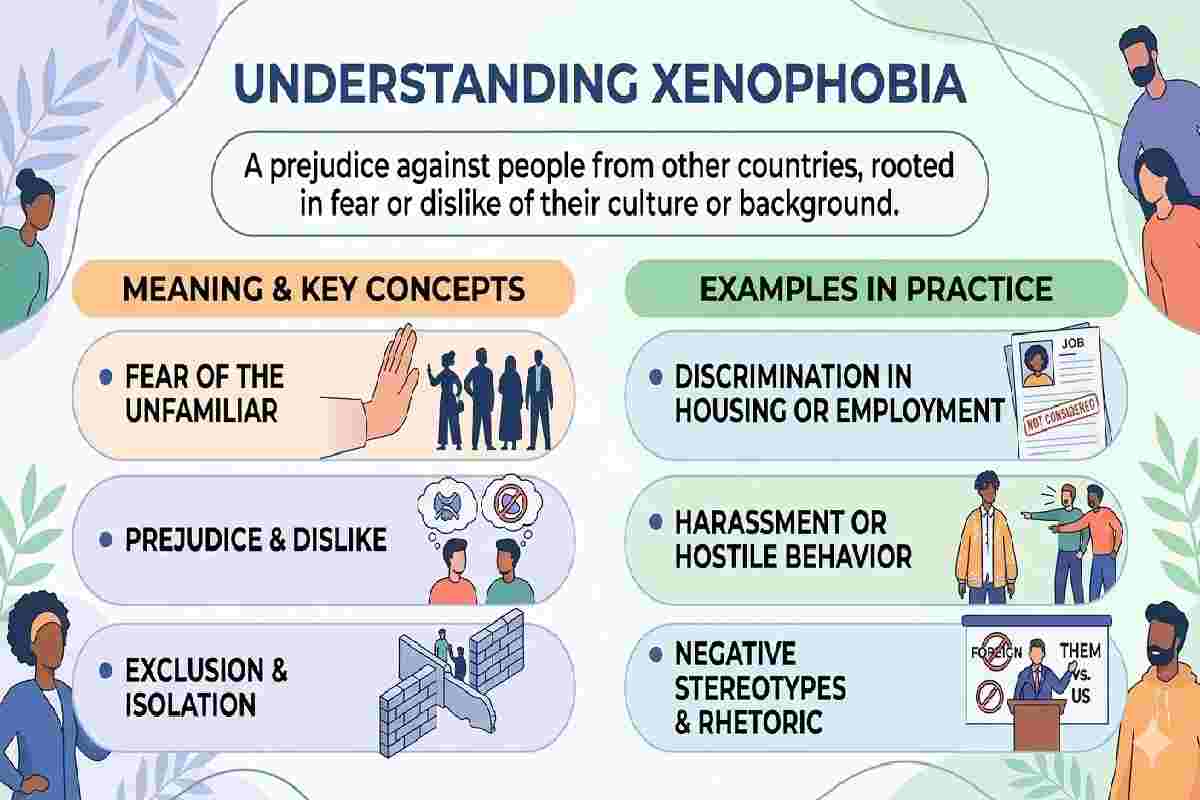
Xenophobia refers to the fear, dislike, or prejudice toward people from other countries or cultures.
It usually involves negative attitudes toward individuals who are perceived as outsiders or foreigners.
This fear can lead to discrimination, exclusion, and sometimes even violence against certain groups.
In simple terms:
Xenophobia = fear or hatred of foreigners or strangers.
Origin of the Word
The word xenophobia comes from two Greek words:
- Xenos – stranger or foreigner
- Phobos – fear
Combined, they literally mean fear of strangers.
Over time, the term has come to describe hostility toward people perceived as foreign.
What Does Xenophobic Mean?
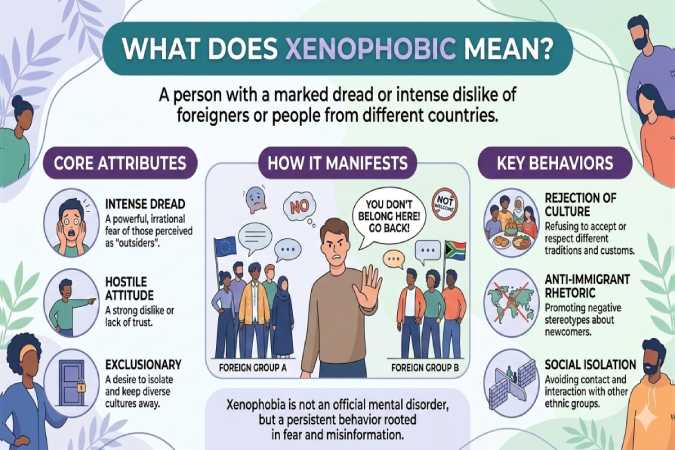
A xenophobic person is someone who shows fear, dislike, or hostility toward people from other countries or cultures.
This behavior may include:
- Distrusting immigrants
- Avoiding people from different cultures
- Supporting policies that exclude foreigners
- Making negative stereotypes about outsiders
Xenophobia can appear in subtle ways or extreme forms.
Examples of Xenophobia
Understanding xenophobia becomes easier when looking at real examples.
Everyday Life Examples
Here are common everyday examples:
Example 1
A person refuses to rent an apartment to immigrants because they believe foreigners are “untrustworthy.”
Example 2
Someone mocks a colleague’s accent and says they should “go back to their country.”
Example 3
People avoid interacting with neighbors from a different culture because they assume they are dangerous.
Example 4
Students bully a classmate because they recently moved from another country.
These behaviors show prejudice toward people perceived as outsiders.
Political Examples
Xenophobia can also appear in politics.
Examples include:
- Campaigns blaming immigrants for economic problems
- Policies banning specific nationalities
- Politicians spreading fear about foreign cultures
These attitudes often create division in society.
Historical Examples
History contains many examples of xenophobia.
The Holocaust
The persecution of Jewish people in Nazi Germany was fueled by extreme prejudice and hatred toward a group perceived as different.
Anti-immigrant laws
Some countries in the past introduced laws designed to prevent certain ethnic groups from immigrating.
These policies were often based on fear of cultural or economic competition.
Workplace Examples
Xenophobia can also occur in professional environments.
Examples include:
- Employers refusing to hire immigrants
- Workers excluding colleagues from different cultures
- Mocking someone’s language skills
- Assuming foreign workers are less competent
Such behavior creates toxic workplaces.
What Causes Xenophobia?
Xenophobia can develop for many reasons.
Fear of the Unknown
People often fear things they do not understand.
When individuals encounter unfamiliar cultures, languages, or traditions, they may react with suspicion or fear.
Economic Competition
Some people believe immigrants take jobs or resources away from locals.
This belief can create hostility toward foreigners.
Cultural Differences
Differences in religion, customs, and social values sometimes cause tension between groups.
When individuals feel their culture is threatened, they may react with xenophobia.
Political Influence
Political leaders and media narratives can influence public opinion.
When messages portray foreigners as dangerous or problematic, xenophobic attitudes can grow.
Effects of Xenophobia
Xenophobia affects both individuals and societies.
Social Impact
Xenophobia can lead to:
- discrimination
- social division
- hate crimes
- community conflict
It weakens trust between different groups.
Economic Impact
Discrimination against immigrants may reduce economic productivity.
Many immigrants contribute to innovation, entrepreneurship, and workforce growth.
When they face discrimination, societies may lose valuable talent.
Psychological Impact
Victims of xenophobia often experience:
- stress
- anxiety
- depression
- social isolation
Feeling unwelcome in a society can severely affect mental health.
Difference Between Xenophobia and Racism
These terms are related but not identical.
| Concept | Meaning |
| Xenophobia | Fear or hostility toward foreigners |
| Racism | Discrimination based on race |
| Nationalism | Strong loyalty to one’s nation |
Someone may be xenophobic without focusing on race. Instead, they target people perceived as outsiders.
How to Prevent Xenophobia
Reducing xenophobia requires effort from individuals, communities, and governments.
Education
Learning about different cultures reduces fear and misunderstanding.
Cultural exchange
Interaction between groups builds empathy and understanding.
Responsible media
Media should avoid spreading stereotypes about immigrants or minorities.
Inclusive policies
Governments can promote equality and protect minority rights.
Why Understanding Xenophobia Matters
In a globalized world, people from different cultures interact daily.
Understanding xenophobia helps societies:
- promote tolerance
- prevent discrimination
- create inclusive communities
- protect human rights
Recognizing xenophobic attitudes is the first step toward reducing them.
FAQ SECTION
What is xenophobia in simple terms?
Xenophobia is the fear or dislike of people from other countries or cultures.
What is an example of xenophobia?
Refusing to hire someone because they are from another country is an example of xenophobia.
Is xenophobia the same as racism?
No. Racism focuses on race, while xenophobia focuses on foreigners or outsiders.
What causes xenophobia?
Common causes include fear of the unknown, economic competition, cultural differences, and political influence.
Can xenophobia occur within the same country?
Yes. People may show xenophobia toward groups from different regions or cultures within the same country.
How can society reduce xenophobia?
Education, cultural exchange, inclusive policies, and responsible media can help reduce xenophobia.
Conclusion
Xenophobia is the fear, distrust, or hostility toward people who are perceived as foreigners or outsiders. While it may sometimes begin with simple misunderstandings or unfamiliarity, it can grow into serious discrimination that affects individuals, communities, and entire societies.
By recognizing what xenophobia looks like—whether in everyday interactions, politics, workplaces, or historical events—we can better understand its impact. Awareness is an important first step in preventing prejudice and promoting respect among people from different cultural backgrounds.
Encouraging education, open dialogue, and cultural exchange helps reduce fear of the unknown and builds stronger, more inclusive communities. In an increasingly connected world, understanding and addressing xenophobia is essential for creating societies based on equality, empathy, and mutual respect.