


Table of Contents
What is Midi Health?
Midi Health is a telehealth company that provides virtual healthcare specifically for women experiencing perimenopause, menopause, and related midlife health concerns. Founded with the mission to address the massive gap in women’s midlife healthcare, Midi connects patients with specialized clinicians through virtual visits covered by major insurance providers.
The company operates in all 50 states and partners with major health systems, Fortune 100 employers, and insurance networks to make expert menopause care accessible and affordable.
Key Facts About Midi:
- Founded by women who experienced firsthand the lack of adequate menopause care
- Backed by over $100 million in venture funding from reputable healthcare investors
- Partnerships with health systems like Memorial Hermann
- Offered as an employee benefit by Fortune 100 companies
- Available nationwide through virtual visits
- Accepts most PPO insurance plans
What Makes Midi Different from Traditional Care
Traditional healthcare often fails women in midlife for several reasons:
The Traditional Care Problem:
- Primary care physicians (PCPs) often lack specialized menopause training
- Long wait times to see specialists (3-6 months typical)
- Brief appointment times don’t allow for thorough discussion
- Many doctors dismiss symptoms or suggest “just wait it out”
- Hormone replacement therapy (HRT) expertise is rare
- Insurance-covered options are limited
Midi’s Approach:
- Specialized Expertise: All clinicians specialize in women’s midlife health and menopause medicine
- Immediate Access: Appointments typically available within days, sometimes same-day
- Comprehensive Visits: 30-minute initial consultations with time to discuss your full health history
- Hormone-First Philosophy: Evidence-based approach prioritizing bioidentical hormone therapy when appropriate
- Holistic Care Plans: Addressing hormones, weight, mood, sleep, sexual wellness, and more
- Insurance Covered: In-network with major PPO plans, making specialized care affordable
- Ongoing Support: Regular follow-ups and messaging access to your clinician
Services and Specializations
Midi offers comprehensive midlife healthcare covering:
Core Services:
- Perimenopause symptom management
- Menopause treatment and support
- Hormone replacement therapy (HRT) prescription and management
- Weight management (including GLP-1 medications like Ozempic/Wegovy)
- Sexual wellness and vaginal health
- Mood and cognitive support
- Sleep optimization
- Hair and skin health
- Cancer survivorship care
- Preventative health and longevity planning
Midi takes a personalized approach, creating customized care plans based on your symptoms, medical history, lifestyle, and preferences.
How Midi Health Works: The Virtual Care Process
Understanding what to expect helps you decide if Midi is right for you. Here’s the -by- process:
1: Registration and Insurance Verification
Visit Midi’s website or app and create an account. You’ll provide:
- Basic personal information
- Insurance details (upload photo of insurance card)
- State of residence (determines licensed clinician availability)
Midi’s team verifies your insurance eligibility and confirms coverage before your appointment.
2: Intake and Symptom Assessment
Before your first visit, you’ll complete a comprehensive health questionnaire covering:
- Current symptoms and their severity
- Complete medical history
- Family health history
- Medications and supplements you’re taking
- Lifestyle factors (diet, exercise, stress, sleep)
- Health goals and treatment preferences
This intake typically takes 15-20 minutes and ensures your clinician has a complete picture before your virtual visit.
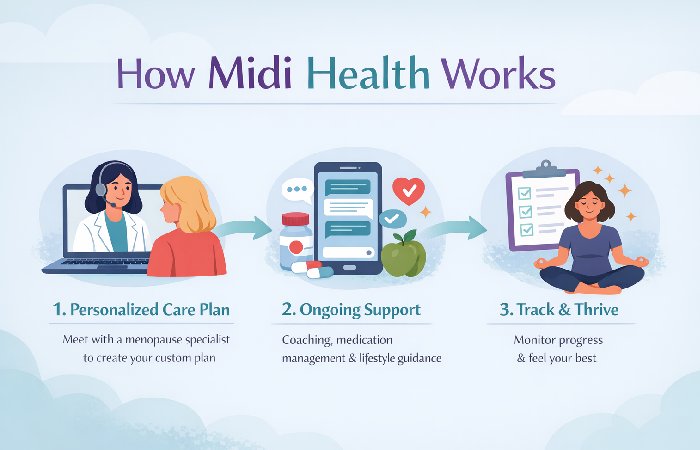
3: Virtual Consultation with Clinician
Your initial visit is a 30-minute video consultation with a Midi clinician (physician, nurse practitioner, or physician assistant) who specializes in menopause medicine.
What Happens During Your Visit:
- Clinician reviews your health history and symptoms
- Discussion of how hormones may be affecting your specific concerns
- Education about treatment options (HRT, non-hormonal medications, lifestyle interventions)
- Answering all your questions without rushing
- Collaborative decision-making about your care plan
Patients consistently report feeling heard and validated—often for the first time in their menopause journey.
4: Personalized Care Plan Development
Based on your consultation, your clinician creates a tailored care plan that may include:
Hormone Replacement Therapy (HRT):
- Bioidentical estrogen (patches, pills, creams, or gels)
- Progesterone (for women with a uterus)
- Testosterone (when appropriate for libido, energy, and muscle mass)
Weight Management:
- GLP-1 medications (semaglutide/Ozempic, tirzepatide/Mounjaro) when clinically appropriate
- Nutrition guidance
- Exercise recommendations
Additional Treatments:
- Non-hormonal medications for hot flashes, mood, or sleep
- Supplements specifically formulated for midlife
- Lifestyle coaching (stress management, sleep hygiene, etc.)
Preventative Care:
- Labs to assess hormone levels, cholesterol, glucose, vitamin D, thyroid
- Screenings (mammogram, bone density, etc.)
- Long-term health optimization strategies
5: Prescription and Treatment Implementation
Your clinician sends prescriptions electronically to your preferred pharmacy. Midi works with insurance to maximize coverage, though medication costs depend on your specific insurance plan.
Medication Options:
- FDA-approved bioidentical hormones
- Brand-name and generic options
- Various delivery methods (patches, pills, creams, suppositories)
- Flexible dosing based on symptom response
6: Ongoing Support and Follow-Up
Midi provides continuous care, not just one-time consultations:
- Follow-Up Visits: Scheduled every 3-6 months (frequency based on treatment)
- Messaging: Direct communication with your care team between visits
- Dose Adjustments: Clinicians modify treatments based on symptom response
- Lab Monitoring: Periodic testing to ensure safe, effective treatment
- Care Coordination: Midi can share your care plan with your primary care provider
This ongoing relationship ensures your treatment evolves with your changing needs.
What Conditions Does Midi Health Treat?
Midi specializes in the wide range of symptoms and health concerns women experience during the menopause transition and beyond.
Perimenopause Symptoms
Perimenopause—the transition leading up to menopause—can begin in your late 30s or early 40s and last 4-10 years. Midi treats:
- Irregular periods
- Heavy or prolonged bleeding
- Hot flashes and night sweats
- Sleep disturbances
- Mood swings, anxiety, or depression
- Brain fog and memory issues
- Weight gain (especially abdominal)
- Joint pain
- Decreased libido
- Vaginal dryness
Menopause Symptoms
Once you’ve gone 12 months without a period, you’re in menopause. Common symptoms Midi addresses:
- Persistent hot flashes and night sweats
- Vaginal dryness and painful sex
- Urinary issues (frequency, urgency, infections)
- Continued sleep problems
- Mood and cognitive changes
- Bone density concerns (osteoporosis risk)
- Cardiovascular health management
- Metabolic changes
Weight Management in Midlife
Hormonal changes make weight management particularly challenging during menopause. Midi offers comprehensive weight care:
- GLP-1 medications (when appropriate and covered by insurance)
- Hormone optimization to support metabolism
- Evidence-based nutrition guidance
- Lifestyle coaching
- Treatment of insulin resistance
Sexual Wellness Issues
Menopause significantly impacts sexual health. Midi provides:
- Treatment for low libido
- Vaginal dryness and atrophy solutions
- Painful intercourse management
- Testosterone therapy (when appropriate)
- Relationship and intimacy support
Mood and Cognitive Changes
Hormonal fluctuations profoundly affect mental health and cognitive function:
- Anxiety and panic attacks
- Depression and mood swings
- Brain fog and memory issues
- Difficulty concentrating
- Irritability and emotional volatility
Sleep Disturbances
Sleep problems are one of the most common and disruptive menopause symptoms:
- Insomnia (difficulty falling or staying asleep)
- Night sweats disrupting sleep
- Restless sleep
- Fatigue despite adequate sleep time
Hair and Skin Changes
Declining estrogen affects appearance:
- Hair thinning or loss
- Dry, itchy skin
- Loss of skin elasticity
- Adult acne
- Unwanted facial hair growth
Cancer Survivorship Care
Midi provides specialized care for women with cancer history:
- Hormone therapy considerations for breast cancer survivors
- Managing treatment-induced menopause
- Alternatives to traditional HRT when contraindicated
- Coordinating with oncologists
Midi Health Pricing and Insurance Coverage
Understanding costs is crucial for making an informed decision.
Cost With Insurance (In-Network PPO)
If you have a PPO insurance plan that’s in-network with Midi:
What You Pay:
- Your standard specialist co-pay for each visit (typically $20-60)
- Any applicable deductible and coinsurance
Most patients with PPO insurance pay their regular specialist co-pay, similar to what they’d pay for any other specialist visit. If you haven’t met your deductible, you may pay more initially.
What’s Covered:
- Virtual visits with Midi clinicians
- Care plan development
- Ongoing management and follow-ups
- Messaging with your care team
Self-Pay Pricing (Without Insurance)
If you don’t have insurance or prefer to pay out-of-pocket:
Visit Costs:
- Initial Visit: $250 (30-minute consultation)
- Follow-Up Visits: $150 each (typically every 3-6 months)
Annual Cost Estimate (Self-Pay):
- Year 1: 550-700
- Ongoing years: 2-4 visits = $300-600/year
What Insurance Plans Midi Accepts
Accepted:
- Most nationwide PPO plans (Aetna, Anthem, Blue Cross Blue Shield, Cigna, United Healthcare, and many others)
- Available in all 50 states
- Many employer-sponsored health plans
- HSA and FSA eligible
NOT Accepted:
- Medicare or Medicare Advantage plans (Midi cannot bill Medicare; Medicare beneficiaries can use as self-pay but cannot submit claims)
- Medicaid/Medi-Cal (Midi is not enrolled with state healthcare programs)
- Most HMO plans (which typically require in-network referrals and don’t cover out-of-network telehealth)
Additional Costs to Consider (Medications, Labs)
Prescription Medications: Midi prescriptions are filled at your regular pharmacy using your insurance prescription coverage (separate from visit coverage).
Typical Costs:
- Bioidentical HRT: 30-150/month without
- GLP-1 Weight Loss Medications: 25-200/month with coverage (coverage varies significantly)
- Supplements: $30-70/month (not typically covered by insurance)
Lab Work: Your clinician may order blood tests or other labs. These are processed through local labs and billed to your insurance separately (or paid out-of-pocket at lab rates).
Total Monthly Cost Examples:
With Good Insurance:
- Visit costs: $8-20/month (averaged over year)
- HRT medications: $10-30/month
- Total: $18-50/month
Self-Pay Without Insurance:
- Visit costs: $45-60/month (averaged)
- HRT medications: $30-150/month
- Total: $75-210/month
Treatment Options Available Through Midi
Midi offers evidence-based treatments tailored to your needs.
Hormone Replacement Therapy (HRT)
Midi’s approach is “hormone-first,” meaning they prioritize bioidentical hormone therapy when medically appropriate.
Estrogen:
- Forms: Patches (most common), pills, creams, gels, vaginal rings
- Benefits: Reduces hot flashes, improves sleep, supports bone health, helps vaginal health
- Typical dosing: Start low, increase as needed based on symptom response
Progesterone:
- Required for: Women with a uterus (to protect uterine lining)
- Forms: Pills, vaginal suppositories
- Benefits: Protects endometrium, may improve sleep
Testosterone:
- Emerging option for women (less commonly prescribed but gaining acceptance)
- Benefits: Improves libido, energy, muscle mass, mood
- Forms: Creams, pellets, injectables
Safety: Midi clinicians follow evidence-based guidelines and screen for contraindications. For most women, bioidentical HRT has an excellent safety profile with significant quality-of-life benefits.
GLP-1 Medications for Weight Management
Midi prescribes GLP-1 medications (semaglutide/Ozempic/Wegovy, tirzepatide/Mounjaro/Zepbound) when clinically appropriate for weight management.
Who Qualifies:
- BMI ≥30, or BMI ≥27 with weight-related health conditions
- Unable to lose weight through diet and exercise alone
- No contraindications (personal/family history of certain cancers, pancreatitis, etc.)
Coverage: GLP-1 insurance coverage varies dramatically. Some plans cover for obesity, others don’t. Out-of-pocket costs are $900-1,400/month.
Midi’s Approach: Comprehensive weight care including medication, nutrition guidance, lifestyle support, and hormone optimization.
Non-Hormonal Prescription Medications
For women who can’t or don’t want hormone therapy:
- SSRIs/SNRIs (antidepressants) for hot flashes and mood
- Gabapentin for hot flashes and sleep
- Vaginal estrogen (very low dose, local effect only)
- Sleep medications when appropriate
- Medications for specific symptoms (hair loss, skin issues, etc.)
Supplements and Lifestyle Support
Midi offers proprietary supplements formulated for midlife:
- Metabolism support
- Sleep enhancement
- Cognitive function
- Joint health
Plus lifestyle coaching:
- Nutrition guidance
- Exercise recommendations
- Stress management techniques
- Sleep hygiene optimization
Alternative and Complementary Therapies
Midi clinicians can recommend:
- Cognitive behavioral therapy (CBT) for insomnia or mood
- Acupuncture
- Mind-body practices
- Physical therapy (coordinated with external providers)
Midi Health Clinicians: Who Will Care for You?

Clinician Qualifications and Specializations
Midi clinicians are licensed healthcare providers with specific expertise in women’s midlife health:
Provider Types:
- Physicians (MDs/DOs): Often board-certified in OB/GYN, family medicine, or internal medicine
- Nurse Practitioners (NPs): Advanced practice nurses specializing in women’s health
- Physician Assistants (PAs): Licensed to practice medicine under physician supervision
All Midi clinicians:
- Are licensed in the state where you reside
- Specialize in menopause medicine
- Receive ongoing training in the latest menopause research and treatments
- Focus exclusively on women’s midlife health (not general practice)
Training in Menopause Medicine
Unlike general practitioners who may see menopause patients occasionally, Midi clinicians:
- Complete specialized training in menopause management
- Stay current with North American Menopause Society (NAMS) guidelines
- Treat hundreds or thousands of menopause patients (vs. occasional cases)
- Understand nuanced differences in HRT formulations, dosing, and delivery methods
- Know how to manage complex cases (cancer survivors, multiple comorbidities)
Patient-Clinician Matching Process
Midi matches you with a clinician based on:
- State licensing requirements
- Availability
- Specific expertise needed for your situation
- Language preferences (when available)
You maintain continuity with the same clinician for follow-ups, building a relationship over time.
Midi Health Reviews and Patient Experiences
What Patients Say They Love
Based on Trustpilot reviews, Reddit discussions, and testimonials:
“Finally feeling heard and validated” Women consistently report that Midi clinicians listen without judgment and take symptoms seriously—often the first provider to do so.
“Fast access to specialized care” Patients appreciate getting appointments quickly vs. 3-6 month waits for local specialists.
“Life-changing symptom relief” Numerous reviews describe dramatic improvements in hot flashes, sleep, mood, energy, and quality of life within weeks of starting treatment.
“Knowledgeable, compassionate clinicians” Patients feel their providers genuinely care and have deep expertise in menopause.
“Convenient and easy process” Virtual visits from home save time and eliminate barriers to care.
Common Complaints and Concerns
Billing and Insurance Issues: Some patients report confusion about what’s covered, unexpected bills, or delays in insurance processing.
Customer Service Responsiveness: Occasional complaints about difficulty reaching support or slow responses to non-clinical questions.
Medication Cost Surprises: Patients sometimes don’t realize medication costs (especially GLP-1s) aren’t covered by their plan until they try to fill prescriptions.
Limited Availability: In some states or during peak times, appointment availability can be limited.
Virtual-Only Limitations: Some women prefer in-person exams or feel virtual care misses important physical assessment.
Success Stories and Outcomes
Weight Loss Success: “I’ve lost 20 pounds with my Midi care plan combining HRT and GLP-1. I finally have energy and feel like myself again.” – Laura M.
Hot Flash Relief: “Within two weeks of starting estrogen patches, my night sweats disappeared. I can finally sleep through the night.” – Glenda M.
Mood Improvement: “I didn’t realize how much perimenopause was affecting my anxiety and mood. Hormone therapy has been life-changing.” – Monica H.
Validation After Years of Dismissal: “I spent three years being told to just deal with it. Midi took me seriously from day one.” – Libby H.
Overall Reputation and Trustworthiness
Trustpilot Rating: 4.8/5 stars (over 1,500 reviews)
BBB Rating: A+ (accredited)
Funding and Legitimacy: Over $100 million raised from reputable healthcare investors; partnerships with major health systems validate credibility
Medical Advisory Board: Includes respected physicians and menopause specialists
Verdict: Midi appears to be a legitimate, well-regarded company with strong patient satisfaction. Most negative reviews relate to billing/insurance coordination rather than quality of clinical care.
Midi Health Pros and Cons
| Advantages of Midi | Limitations and Drawbacks |
| Specialized Expertise: Clinicians focus exclusively on menopause, unlike generalist providers | No Medicare/Medicaid: Cannot serve these populations even as self-pay |
| Fast Access: Appointments typically available within days vs. months-long waits | Limited HMO Coverage: Most HMOs don’t cover out-of-network telehealth |
| Insurance Coverage: In-network with major PPO plans makes specialized care affordable | Virtual Only: No physical exams (must coordinate with local providers when needed) |
| Comprehensive Care: Addresses hormones, weight, mood, sleep, sexual health holistically | Medication Costs: Insurance coverage varies; GLP-1s can be extremely expensive |
| Convenient: Virtual visits from home eliminate travel time and waiting rooms | Not for Emergencies: Cannot handle acute medical crises requiring immediate in-person care |
| Time and Attention: 30-minute initial visits allow thorough discussion | Variable Insurance Experience: Some patients report billing confusion or delays |
| Evidence-Based: Follows current guidelines and research, not outdated protocols | Limited Local Lab Coordination: You must arrange blood work through local facilities |
| Ongoing Support: Regular follow-ups and messaging access between visits | Waitlists in Some States: Growing demand occasionally causes scheduling delays |
| Nationwide: Available in all 50 states | |
| Positive Reviews: Thousands of patient testimonials report life-changing results |
How Midi Health Compares to Alternatives
Midi vs. Traditional In-Person Care
Midi Advantages:
- Faster access (days vs. months)
- Specialized menopause expertise
- More time in appointments
- Convenience of virtual visits
- Often similar or lower cost with insurance
Traditional Care Advantages:
- Physical examination capability
- Established relationship with existing doctor
- Easier coordination with other specialists
- May be more comfortable for some patients
Midi vs. Other Menopause Telehealth (Winona, Evernow, Gennev)
| Feature | Midi | Winona | Evernow | Gennev |
| Insurance | Accepts most PPO | Self-pay only | Self-pay only | Self-pay only |
| First visit cost | $0-250 | $249 | $199 | $250 |
| Follow-ups | Insurance/150 | $99 | $99 | $150 |
| Medications | FDA-approved | Compounded | Compounded | FDA-approved |
| Specialization | Menopause only | Menopause + general | Women’s health | Menopause |
| GLP-1 availability | Yes | No | Limited | Limited |
When to Choose Midi: You have PPO insurance, want FDA-approved medications, need comprehensive care including weight management
When to Choose Alternatives: You don’t have insurance that covers Midi, prefer compounded hormones, want lower upfront costs
Midi vs. Primary Care Physician
Midi Advantages:
- Menopause specialization and expertise
- More appointment time
- Focus on hormone-first approach
- Comprehensive menopause care plans
PCP Advantages:
- Knows your complete medical history
- Can handle all health needs in one place
- May be covered better by insurance
- Physical exam capability
Best Approach: Many women use both—Midi for menopause-specific care, PCP for general health. Midi can coordinate with your PCP.
Getting Started with Midi Health: -by- Guide
Before You Sign Up: Preparation Checklist
Gather This Information:
- Current medications and supplements list
- Medical history summary
- Family health history
- Recent lab results (if available)
- Insurance card (front and back photos)
- List of symptoms and questions
Verify Your Coverage:
- Check if your insurance plan is PPO
- Call your insurance to confirm specialist copay amount
- Understand your deductible status
Creating Your Account
- Visit joinmidi.com
- Click “Book Your First Visit”
- Create account with email and password
- Upload insurance card photos
- Complete health questionnaire (15-20 minutes)
Insurance Verification Process
After registration, Midi’s team:
- Verifies your insurance eligibility
- Confirms coverage details
- Contacts you with any issues
- Estimates your out-of-pocket costs
This typically takes 1-2 business days.
Scheduling Your First Appointment
Once verified:
- Browse available appointment times
- Select a convenient slot (often within days)
- Receive appointment confirmation email
- Get reminders before your visit
What to Expect in Your Initial Visit
Preparation:
- Find a private, quiet space
- Test your internet and camera
- Have your symptom list and questions ready
- Log in 5 minutes early
During the 30-Minute Visit:
- Introduction and rapport building
- Review of your health history and symptoms
- Discussion of hormone changes and their effects
- Education about treatment options
- Collaborative decision-making
- Care plan creation
- Prescription sending (if appropriate)
- Scheduling follow-up
After Your Visit:
- Receive care plan summary
- Prescriptions sent to pharmacy
- Access to messaging for questions
- Follow-up scheduled
Final Thoughts: Is Midi Health Right for You?
Midi Health has emerged as a leading solution for the millions of women struggling to find adequate menopause care in the traditional healthcare system. By combining specialized expertise, insurance coverage, virtual convenience, and comprehensive treatment approaches, Midi addresses many of the barriers that have left women suffering unnecessarily through perimenopause and menopause.