

Last Updated: October 27, 2026
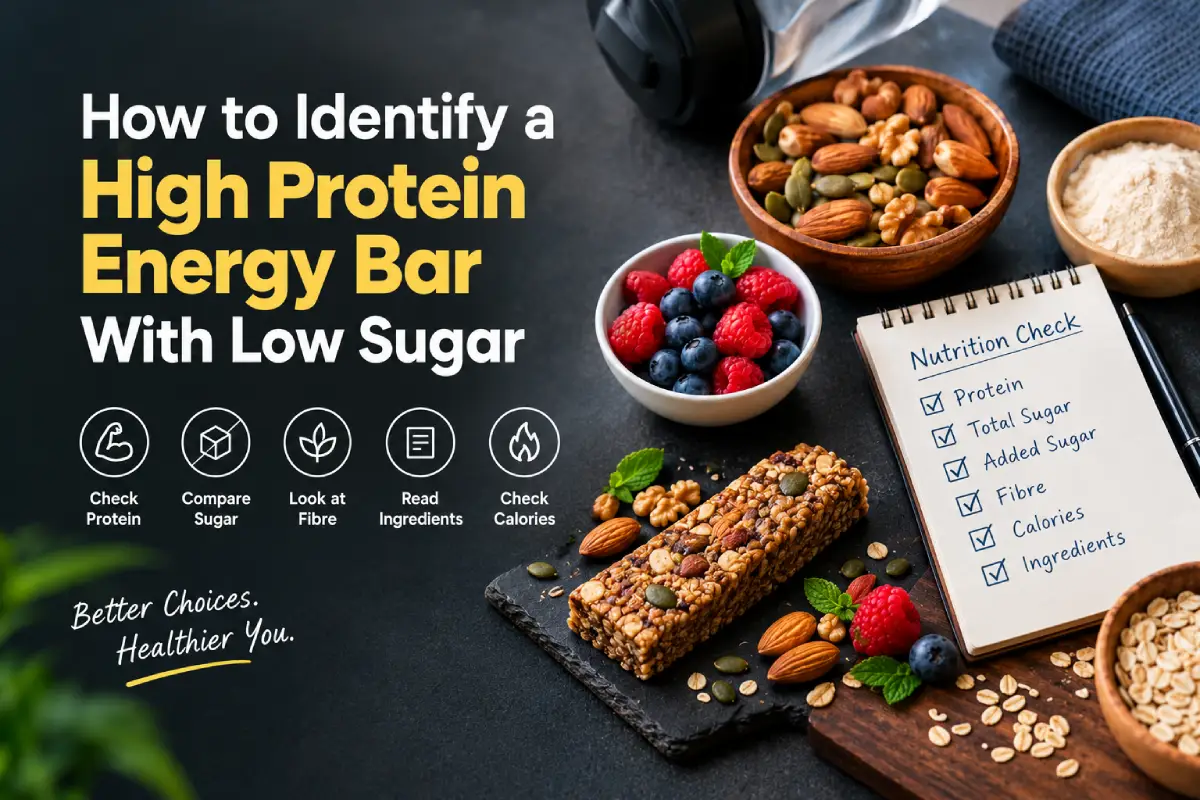
To identify a high-protein energy bar with low sugar, check the nutrition label for protein per
serving, total sugar, added sugar, fiber, and calories. A good option should provide a useful
amount of protein, contain limited added sugar, and fit your daily nutritional needs. Always
compare the ingredients and serving size instead of choosing a bar based only on its packaging
or fitness claims.
Table of Contents
Key Takeaways
- Look for a bar that provides around 10–20 grams of protein, depending on your needs.
- Compare total sugar and added sugar separately.
- Check fiber content to understand the bar’s overall nutritional value.
- Read the ingredient list for sweeteners, protein sources, and other ingredients.
- Choose an energy bar that suits your activity level and daily diet.
1. Check the Protein Content First
Protein is important for muscle maintenance, recovery, and several essential functions in the
body. When choosing a high-protein energy bar, start by checking how much protein it provides
per serving.
For many people, a bar containing 10–20 grams of protein can be a convenient snack, although
individual requirements vary.
Look at the protein sources listed on the packaging. Common options include milk protein, whey
protein, soy protein, peanuts, nuts, and seeds. Different sources provide different amounts and
types of amino acids.
If you follow a vegetarian diet, check whether the protein source matches your dietary
preferences.
2. Look Beyond the Total Sugar Number
A low-sugar energy bar should not be selected by looking at a single number alone. Nutrition
labels may list both total sugar and added sugar.
Total sugar includes naturally occurring sugars and added sugars. Added sugar refers to
sugars introduced during processing or preparation.
For example, an energy bar containing dates may have naturally occurring sugar, while another
bar may contain added sugar or syrup.
Compare both values when available. A bar with lower added sugar may be a suitable option,
but its overall nutritional quality still depends on its protein, fiber, calories, and ingredients.
3. Understand Calories and Serving Size
A high-protein energy bar can contain different amounts of calories depending on its size and
ingredients.
Nuts, seeds, oils, and protein ingredients contribute to its energy content. Therefore, a bar with
low sugar is not necessarily low in calories.
Check whether the nutrition information applies to one complete bar or a smaller serving. If the
package contains multiple servings, adjust the numbers accordingly.
For a quick snack, choose a portion that fits your hunger and daily energy requirements. Before
or after exercise, your needs may differ depending on the intensity and duration of your activity.
4. Check Fiber and the Ingredient List
Fiber supports normal digestion and contributes to a balanced diet. Comparing fibre content can
help you understand how two otherwise similar energy bars differ.
Next, read the ingredient list. Ingredients are generally listed in descending order by weight, so
the first few ingredients can tell you a lot about the product.
Look for clearly identified protein sources and check how sweeteners, syrups, oils, and other
ingredients are used.
Some bars use sugar alcohols or non-sugar sweeteners to reduce added sugar. These
ingredients may suit some people but can cause digestive discomfort in others, particularly
when consumed in larger amounts.
5. Compare Energy Bars Before Buying
Use this simple checklist when comparing different products.
| What to check | What to look for |
| Protein | A useful amount for your needs |
| Total sugar | Compare across similar serving sizes |
| Added sugar | Lower amounts, where possible |
| Fibre | Appropriate for your activity and goals |
| Calories | Appropriate for your activity and goals |
| Ingredients | Clear protein sources and suitable sweeteners |
No single number determines whether an energy bar is healthy. Consider the complete nutrition
label rather than focusing exclusively on protein or sugar.
6. When Should You Eat a High-Protein Energy Bar?
A high-protein energy bar can be useful when you need a convenient snack during a busy day,
while travelling, or around a workout.
After exercise, protein can contribute to muscle repair and recovery as part of an adequate daily
diet. However, an energy bar is not essential if you already meet your nutritional needs through
regular meals.
Whole foods such as yogurt, eggs, lentils, milk, nuts, and beans can also provide protein and
other valuable nutrients.
7. How Does Proathlix Fit Into Your Choice?
When exploring Proathlix energy bars, use the same checklist you would apply to any nutrition
product. Check the protein and sugar values on the specific product’s packaging, review the
serving size, and read the ingredient list before making a decision.
Do not assume that every protein bar contains little sugar simply because it is marketed for
fitness. Compare the nutritional information to find an option that fits your preferences and
dietary requirements.
Frequently Asked Questions
1. How much protein should a high-protein energy bar contain?
A bar providing around 10–20 grams of protein can be a convenient option for many adults. The
right amount depends on your daily protein requirements, portion size, and other foods you eat.
2. What is considered low sugar in an energy bar?
There is no single universal cutoff for every energy bar. Compare total sugar and added sugar
per serving, and check the applicable nutrition-label criteria for any specific low-sugar claim.
3. Can an energy bar have high protein and low sugar?
Yes. Some bars use concentrated protein sources and limited added sugar to achieve this
combination. However, you should still check calories, fiber, ingredients, and serving size.
4. Are low-sugar protein bars suitable for weight management?
They may fit into a weight-management plan when their portion size and calorie content suit
your needs. Low sugar alone does not guarantee weight loss.
5. Is an energy bar better than a regular snack?
Not necessarily. Energy bars offer convenience, but foods such as yogurt, fruit, nuts, and boiled
eggs can also make nutritious snacks. The better choice depends on your nutritional needs and
preferences.
Final Thoughts
Choosing a high-protein energy bar with low sugar becomes easier when you understand the
nutrition label. Compare protein, total sugar, added sugar, calories, fiber, and ingredients before
buying. With Proathlix or any other brand, focus on the complete nutritional profile rather than
marketing claims. A well-chosen energy bar can complement a balanced diet, but it works best
alongside nutritious meals and an active lifestyle.