

Foods that causes energy drop. Not all foods affect your energy the same way. The key difference lies in how quickly they’re digested and absorbed into your bloodstream.
Table of Contents
The Blood Sugar Rollercoaster Explained
When you eat foods high in refined carbohydrates or added sugars, here’s what happens inside your body:
Minutes 0-15: Sugar floods your bloodstream rapidly. Your blood glucose spikes.
Minutes 15-30: Your pancreas releases a surge of insulin to move that sugar out of your blood and into your cells.
Minutes 30-90: Blood sugar plummets below baseline. Your brain—which relies heavily on glucose—signals fatigue, brain fog, and cravings for more quick energy.
This spike-and-crash pattern is the root cause of most food-related energy drops. Foods with a high glycemic index trigger this rollercoaster effect most aggressively.
How Refined Foods Impact Your Energy
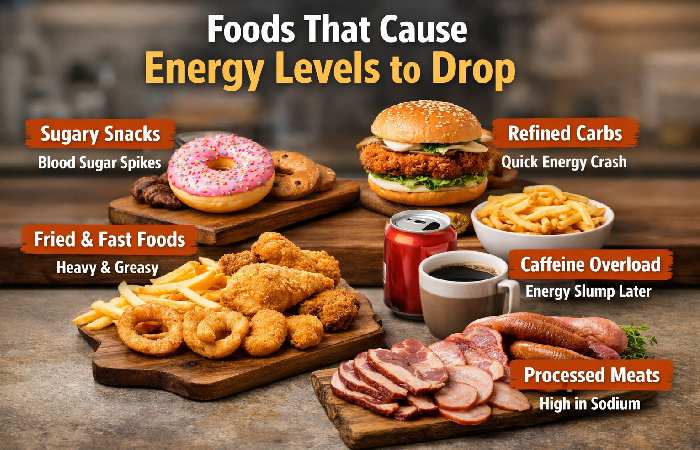
Refined foods have been stripped of fiber, vitamins, and minerals during processing. Without fiber to slow digestion, sugars enter your bloodstream too quickly. The result? A temporary energy boost followed by a sharp crash that leaves you more tired than before you ate.
In contrast, whole foods with intact fiber, protein, and healthy fats provide steady, sustained energy because they digest slowly and release glucose gradually into your bloodstream.
10 Foods That Drain Your Energy
Let’s examine the most common culprits behind energy crashes—and what you should reach for instead.
1. White Bread, Pasta, and Rice
Why they drain energy: Refined grains lose their fiber-rich outer layer during processing. What remains is essentially pure starch that behaves like sugar in your body. A study found that high-glycemic-index diets correlate with increased fatigue and mood disturbances.
White bread has a glycemic index of around 75 (nearly as high as pure glucose at 100), meaning it spikes blood sugar rapidly.
What to eat instead:
- Whole grain bread (look for “100% whole wheat” as the first ingredient)
- Brown rice, quinoa, or farro
- Whole wheat or legume-based pasta
- Steel-cut oats
These complex carbohydrates contain fiber that slows digestion and prevents energy crashes.
2. Sugary Breakfast Cereals
Why they drain energy: Most popular breakfast cereals contain 10-20 grams of added sugar per serving—sometimes as much as a candy bar. Even “healthy” options like granola can pack 12+ grams of sugar per half-cup.
The combination of refined grains and added sugar creates a perfect storm for mid-morning fatigue.
What to eat instead:
- Unsweetened oatmeal topped with berries and nuts
- Plain Greek yogurt with fresh fruit
- Eggs with whole grain toast and avocado
- Chia seed pudding
3. Candy and Sweets
Why they drain energy: Candy delivers pure sugar without any protein, fat, or fiber to buffer absorption. You’ll feel energized for about 20-30 minutes, then experience a crash that’s often worse than your original fatigue.
Some candy bars contain up to 52 grams of sugar—more than double the daily recommended limit for women (25g) and well over half the limit for men (36g).
What to eat instead:
- Dark chocolate (70%+ cacao) with almonds
- Fresh fruit with nut butter
- A handful of trail mix (unsalted nuts and seeds)
- Greek yogurt with honey
4. Energy Drinks
Why they drain energy: Despite their name, energy drinks are energy saboteurs. They typically contain 50+ grams of sugar (equivalent to 10 teaspoons) plus 200-300mg of caffeine per can.
Research shows energy drinks may temporarily boost concentration by about 24%, but the subsequent crash leaves you more fatigued than before. Regular consumption also builds caffeine tolerance, requiring increasingly larger amounts for the same effect.
What to eat instead:
- Green tea (provides 25-50mg caffeine with L-theanine for smooth energy)
- Sparkling water with lemon
- Herbal tea
- Cold water (dehydration often mimics fatigue)
5. Excessive Coffee
Why it drains energy: While moderate coffee consumption (1-2 cups) can enhance alertness, relying on coffee throughout the day creates problems.
Caffeine works by blocking adenosine receptors—adenosine is the chemical that makes you feel tired. But regular coffee consumption causes your brain to produce more adenosine receptors, meaning you need more caffeine to feel the same effect.
Caffeine’s half-life is about 5 hours, and it can disrupt sleep quality for up to 8-12 hours after consumption. Poor sleep reduces next-day energy, creating a vicious cycle.
What to do instead:
- Limit coffee to 1-2 cups before noon
- Never use coffee as a substitute for sleep or proper nutrition
- Switch afternoon coffee for herbal tea or a short walk
6. Sweetened Juices and Smoothies
Why they drain energy: Fruit juice—even 100% juice—concentrates the sugar from multiple fruits while removing the fiber. One 12-ounce glass of orange juice contains about 33 grams of sugar with virtually no fiber to slow absorption.
Store-bought smoothies are even worse, often containing 50-70 grams of sugar plus preservatives for shelf stability.
What to eat instead:
- Whole fresh fruit (the fiber slows sugar absorption)
- Homemade smoothies with protein powder, spinach, and whole fruit
- Vegetable-based juices with minimal fruit
- Infused water with cucumber and mint
7. Fried and Fast Foods
Why they drain energy: Fried foods are high in fat and low in fiber—a combination that significantly slows digestion. This delayed digestion means energy-boosting nutrients take longer to reach your cells.
Additionally, fried and fast foods are often nutrient-poor, displacing more nutritious options from your diet. The heavy, overly-full feeling after eating fried food further compounds fatigue.
What to eat instead:
- Grilled chicken or fish
- Baked sweet potato fries
- Fresh veggie wraps
- Grain bowls with lean protein
8. Low-Fat and Low-Calorie Packaged Foods
Why they drain energy: This might surprise you, but low-fat foods often contribute to energy crashes. Here’s why:
Fat provides flavor, so manufacturers compensate by adding extra sugar and sodium to low-fat products. Additionally, healthy fats are essential for sustained energy—they slow digestion and help you feel satisfied longer.
Eating too few calories throughout the day can also create hormonal imbalances and slow your metabolism, leaving you feeling chronically drained.
What to eat instead:
- Full-fat Greek yogurt
- Avocado on whole grain toast
- Nuts and seeds (almonds, walnuts, pumpkin seeds)
- Hummus with fresh vegetables
9. Alcohol
Why it drains energy: Alcohol is a central nervous system depressant that makes you feel drowsy. But the effects go deeper:
- Disrupts sleep quality and reduces REM sleep
- Causes dehydration (a major fatigue trigger)
- Can cause hypoglycemia (low blood sugar), especially when consumed without food
- Interferes with neurotransmitters like serotonin and dopamine
Even one evening drink can affect your energy levels the next day.
What to do instead:
- Limit alcohol to 1 drink per occasion
- Always eat when drinking
- Drink a glass of water for every alcoholic beverage
- Avoid alcohol within 3 hours of bedtime
10. Energy Bars and Granola Bars
Why they drain energy: Most commercial energy bars and granola bars are essentially candy bars in disguise. Despite health-focused marketing, many contain:
- 15-25 grams of added sugar per bar
- High-fructose corn syrup as a primary ingredient
- Minimal protein or healthy fats
- Long lists of preservatives and artificial ingredients
What to eat instead:
- Bars with short ingredient lists (nuts, dates, seeds)
- Make your own energy balls with oats, nut butter, and dried fruit
- A handful of raw nuts with a piece of fruit
- Hard-boiled eggs with veggie sticks
The Hidden Culprits: Food Combinations That Amplify Crashes
Individual foods can drain energy, but certain combinations make the crash even worse.
Coffee + Pastry Combo
The classic “grab-and-go” breakfast of coffee and a muffin or donut combines two crash triggers: caffeine and refined sugar. The sugar causes an insulin spike while caffeine blocks fatigue signals temporarily. When both wear off simultaneously (usually around 10-11 AM), the crash is severe.
Juice + Cereal Combo
Another breakfast trap: orange juice paired with sugary cereal. You’re essentially eating sugar on top of sugar—potentially 60+ grams in one meal. This massive glucose load overwhelms your insulin response and guarantees a crash.
Why Timing Matters
Eating large amounts of refined carbs late at night can disrupt sleep quality, while consuming them first thing in the morning without protein sets you up for instability all day. Pairing energy-draining foods with protein, fat, or fiber helps buffer their impact.
How to Build Energy-Stable Meals
Understanding what to avoid is only half the solution. Here’s how to construct meals that sustain energy.
The Protein-Fiber-Fat Formula
Every meal and snack should contain all three macronutrient categories:
Protein (slows digestion, stabilizes blood sugar):
- Lean meats, fish, eggs
- Greek yogurt, cottage cheese
- Legumes, lentils
- Tofu, tempeh
Fiber (prevents glucose spikes, promotes fullness):
- Vegetables (especially leafy greens)
- Whole grains
- Fruits with skin
- Beans and legumes
Healthy Fats (provides sustained energy, enhances satiety):
- Avocados
- Nuts and seeds
- Olive oil
- Fatty fish (salmon, sardines)
Sample Energy-Boosting Meals
Breakfast:
- Scrambled eggs with spinach, whole grain toast, and avocado
- Greek yogurt with berries, walnuts, and chia seeds
- Oatmeal with almond butter and sliced banana
Lunch:
- Grilled chicken salad with mixed greens, chickpeas, olive oil dressing
- Quinoa bowl with roasted vegetables and tahini
- Lentil soup with whole grain crackers
Dinner:
- Baked salmon with sweet potato and broccoli
- Turkey and vegetable stir-fry with brown rice
- Bean and vegetable chili with side salad
Snacks:
- Apple slices with almond butter
- Carrot sticks with hummus
- Handful of mixed nuts
- Hard-boiled egg with cherry tomatoes
Portion Control for Stable Energy
Even healthy foods can cause sluggishness if you overeat. Large meals divert blood flow to your digestive system, reducing oxygen to your brain and muscles—a recipe for the “food coma” effect.
Aim for moderate portions every 3-4 hours rather than two or three massive meals. This keeps your blood sugar and energy levels more consistent throughout the day.
What to Do If You’re Already Crashing
Already experiencing an energy crash? Here’s how to recover quickly:
Immediate strategies (0-30 minutes):
- Drink 16 ounces of cold water (dehydration amplifies fatigue)
- Take a 10-minute walk outside (increases oxygen and circulation)
- Eat a small protein-fiber snack (apple with almond butter)
Short-term strategies (1-3 hours):
- Avoid the temptation to reach for more sugar or caffeine
- Eat a balanced meal with protein, complex carbs, and vegetables
- Practice deep breathing to increase oxygen to your brain
Long-term fixes:
- Keep a food-energy journal for one week to identify your personal triggers
- Meal prep energy-stable options for busy days
- Gradually reduce sugar and refined carbs rather than eliminating them overnight
- Stay hydrated (aim for half your body weight in ounces of water daily)
Most people notice improved energy stability within 3-5 days of dietary changes.
Foods That Actually Sustain Energy
Now that you know what to avoid, let’s focus on what you should eat.
Complex Carbohydrates
Unlike refined carbs, complex carbohydrates contain fiber that slows digestion and provides steady energy:
- Whole grains (brown rice, quinoa, oats, barley)
- Starchy vegetables (sweet potatoes, butternut squash)
- Legumes (black beans, lentils, chickpeas)
These foods release glucose gradually, preventing the spike-crash cycle.
Lean Proteins
Protein takes longer to digest than carbohydrates, providing sustained energy and helping you feel full longer:
- Chicken breast and turkey
- Fish and seafood
- Eggs
- Greek yogurt and cottage cheese
- Plant-based options: tofu, tempeh, edamame
Adult males need at least 56 grams of protein daily, while adult females need about 46 grams.
Healthy Fats
Fats are the most calorie-dense macronutrient, providing long-lasting energy without affecting blood sugar:
- Avocados
- Nuts (almonds, walnuts, cashews)
- Seeds (chia, flax, pumpkin)
- Olive oil and coconut oil
- Fatty fish rich in omega-3s
Hydration’s Critical Role
Even mild dehydration—as little as 2% fluid loss—can cause fatigue, difficulty concentrating, and headaches. Your blood volume drops when dehydrated, meaning less oxygen reaches your muscles and brain.
Hydration tips:
- Drink water upon waking
- Keep a water bottle visible throughout the day
- Monitor urine color (should be pale yellow)
- Eat water-rich foods (cucumbers, watermelon, celery)
- Drink a glass of water before each meal
Quick Reference: Energy-Draining Foods vs. Smart Swaps
| Avoid | Swap For |
| White bread | 100% whole grain bread |
| Sugary cereal | Steel-cut oatmeal with berries |
| Candy bar | Dark chocolate with almonds |
| Energy drink | Green tea or sparkling water |
| Multiple coffees | 1-2 cups before noon + herbal tea |
| Fruit juice | Whole fresh fruit |
| French fries | Baked sweet potato wedges |
| Low-fat flavored yogurt | Full-fat plain Greek yogurt |
| Cocktails | Sparkling water with lime |
| Commercial granola bar | Homemade energy balls or raw nuts |
The Bottom Line
The foods that drain your energy typically share three characteristics: they’re high in refined sugars, low in fiber, and lacking in essential nutrients. These qualities trigger blood sugar instability, leaving you tired, unfocused, and craving more quick fixes.
By replacing energy-draining foods with nutrient-dense whole foods rich in fiber, protein, and healthy fats, you can break the crash cycle and maintain stable energy throughout the day.
Start small: replace one energy-draining food this week, then add another swap the following week. Track how you feel. Most people report noticeable improvements within just a few days.
Your energy levels are largely within your control—and it starts with what you put on your plate.
Frequently Asked Questions
Q: Why do I feel so tired after eating carbs?
A: Refined carbohydrates (white bread, pasta, white rice) cause rapid blood sugar spikes followed by insulin surges that drop your blood sugar below baseline. This crash triggers fatigue and brain fog. Complex carbs with fiber (whole grains, vegetables) don’t cause this effect because they digest slowly.
Q: Can coffee actually make you more tired?
A: Yes, if consumed excessively or regularly. While 1-2 cups provide a temporary alertness boost, regular consumption causes your brain to build more adenosine receptors, requiring more caffeine for the same effect. Coffee also disrupts sleep quality when consumed afternoon or evening, reducing next-day energy. Limit coffee to before noon and no more than 4 cups daily.
Q: Why do energy drinks make me crash so hard?
A: Energy drinks combine high doses of caffeine (often 200-300mg per can) with massive amounts of sugar (up to 52 grams). When both stimulants wear off simultaneously, the resulting crash is severe. Additionally, they reduce sleep duration and quality, compounding fatigue over time.
Q: Are all juices bad for energy levels?
A: Even 100% fruit juice lacks the fiber that whole fruit provides, causing blood sugar spikes. One glass of orange juice contains the sugar of 3-4 oranges without the fiber that would slow absorption. Vegetable-based juices with minimal fruit are better options, but whole fruits and vegetables are always superior for sustained energy.
Q: How quickly will I feel better after changing my diet?
A: Most people notice improved energy stability within 3-5 days of reducing refined sugars and increasing whole foods. However, if you’ve been consuming high amounts of caffeine or sugar, you may experience 2-3 days of withdrawal symptoms (headaches, irritability) before feeling better.