

Last Updated: October 26, 2026
Denied Claims Are Costing Practices More Than They Realize
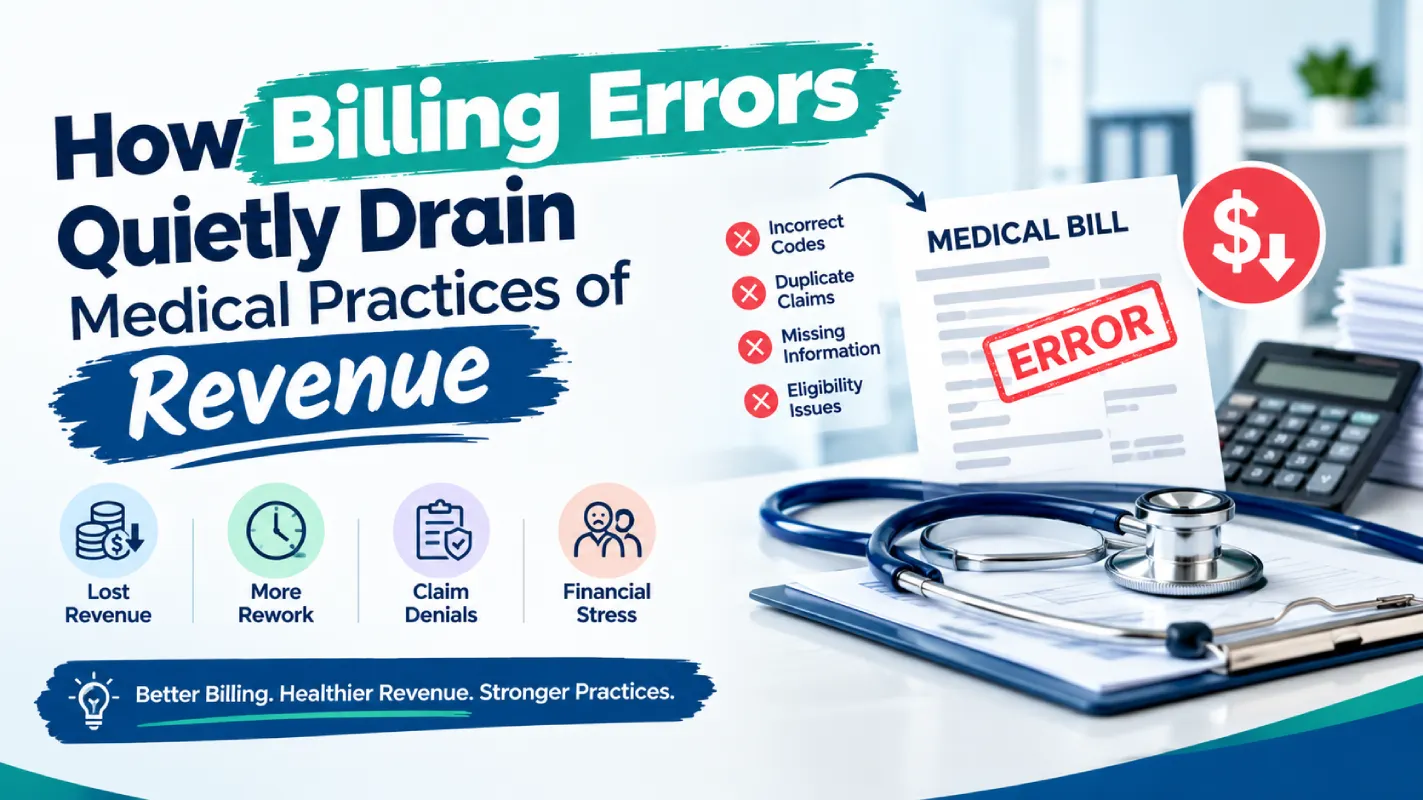
A single rejected claim might look like a minor paperwork hiccup, but multiply that across hundreds of patient encounters a month and the picture changes fast. Practices that don’t track denial patterns often assume the losses are random, when in reality the same handful of coding and documentation errors repeat week after week. Staff spend hours on resubmissions, phone calls with payers, and appeals that could have been avoided with a cleaner first submission. Meanwhile, the clock is ticking on timely filing deadlines, and some claims simply age out before anyone catches the mistake.
The financial strain compounds quietly. Front-office teams are often stretched between patient intake, scheduling, and billing, leaving little bandwidth to audit every claim before it goes out. Smaller practices in particular tend to absorb these losses as a cost of doing business rather than treating them as a solvable operational problem. Over a year, the gap between what’s billed and what’s actually collected can represent a meaningful share of potential revenue, even when patient volume stays steady.
This slow leak rarely shows up as a single alarming number on a monthly report. Instead it surfaces gradually, in aging accounts receivable reports, in staff overtime spent on appeals, and in the quiet resignation that comes from treating denials as unavoidable. Practice administrators who finally sit down and tally the true cost of rework are often surprised by how much time and money has been absorbed by problems that were preventable at the point of submission.
Catching Errors Before They Reach the Payer
The fix isn’t more staff hours spent re-checking spreadsheets. It’s building a review step into the billing process itself, one that flags mismatched codes, missing modifiers, or incomplete patient information before a claim ever leaves the building. This is where automated review tools have changed the math for many practices, turning what used to be a reactive scramble into a proactive checkpoint.
Practices that adopt this kind of system tend to describe the shift in practical terms: fewer claims bouncing back, faster payer turnaround, and less time spent chasing down avoidable denials. The benefits of a claim scrubbing workflow becomes clear fairly quickly once a practice compares denial rates before and after implementation, since the errors caught upfront are the same ones that used to trigger weeks of delay. It also reduces the emotional toll on billing staff, who often carry the frustration of repeated rejections even when the root cause isn’t their fault.
None of this works without accurate coding discipline underneath it. Claims that pass through a review process still need to reflect current procedural terminology and payer-specific rules, which is why many billing teams keep CMS medical billing and coding guidance close at hand when questions arise about code sets or documentation standards tied to Medicare claims. Aligning internal review tools with that kind of authoritative reference keeps the automated checks from drifting out of sync with actual payer expectations.
Staff training plays a role here too. A review tool can flag an error, but someone still needs to understand why the flag appeared and how to correct it without introducing a new mistake downstream. Practices that pair automated checks with periodic coding refreshers tend to see the gap between flagged errors and resolved errors close much faster than those relying on the software alone.
What to Look for When Choosing a Review Process
Not every claims review tool fits every practice, and the differences matter more than vendors tend to admit. A system built for a large hospital network may be overkill for a five-provider clinic, while a tool designed for small practices might lack the specialty-specific rule sets that a cardiology or orthopedic group actually needs. The right fit depends on patient volume, payer mix, and how much customization the billing team is willing to manage on an ongoing basis.
Integration matters just as much as feature lists. A review process that doesn’t connect cleanly with existing practice management or EHR software creates more manual work, not less, which defeats the purpose of adopting it in the first place. Practices should ask vendors directly how updates to coding rules get pushed into the system and how quickly those updates reflect changes from payers or federal guidance.
Reporting visibility is another factor worth weighing carefully. A good system doesn’t just catch errors, it shows patterns over time, so a billing manager can see whether a particular provider, code, or payer is generating a disproportionate share of denials. That kind of visibility turns claims review from a one-time fix into an ongoing improvement loop, which is ultimately what separates practices that stabilize their revenue cycle from those that keep treating each denial as an isolated surprise.
Cost structure deserves equally careful scrutiny before signing a contract. Some vendors charge flat monthly fees regardless of claim volume, while others scale pricing with the number of claims processed, and either model can work depending on how predictable a practice’s billing cycle tends to be. Practices should also weigh how much support comes bundled in, since a tool that requires constant troubleshooting without responsive help can end up costing more in lost time than it saves in caught errors.