

Last Updated: October 18, 2026
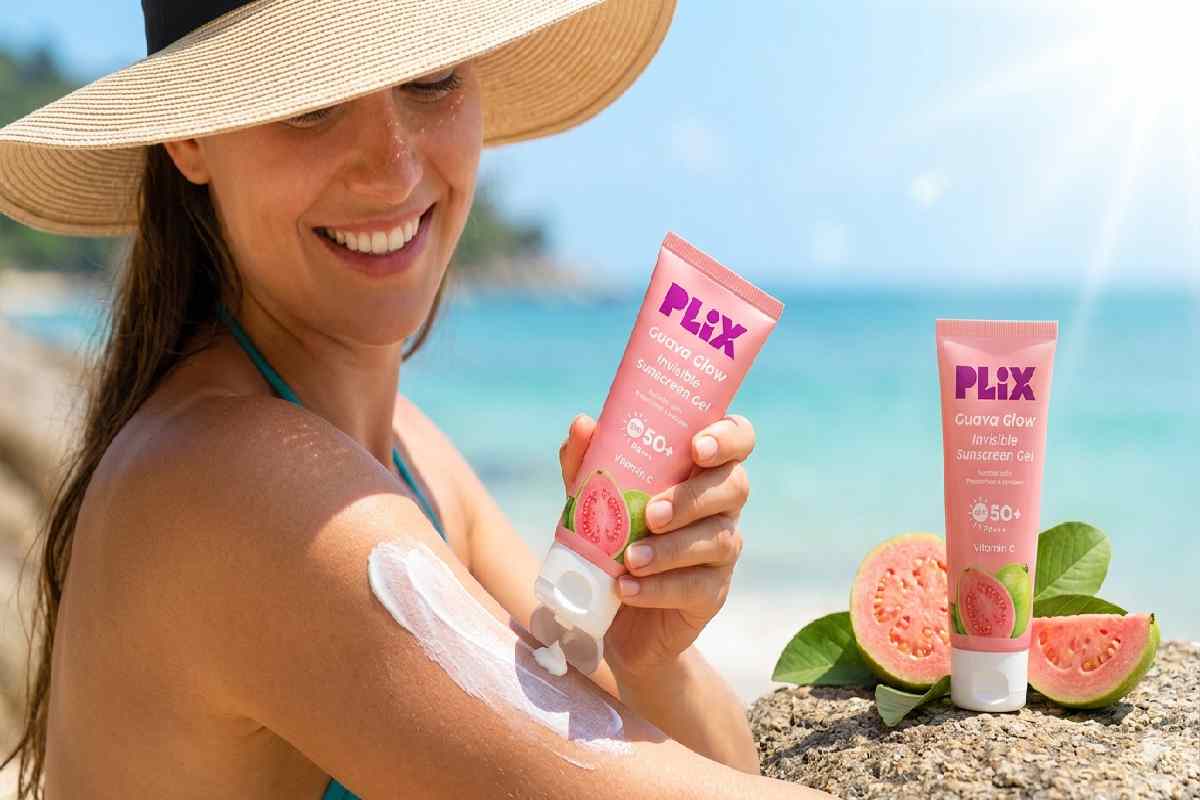
Plix Sunscreen. Plix sunscreens do something most SPF products don’t bother with — they combine genuine broad-spectrum sun protection with active skincare ingredients that actually work for your skin while you wear them.
If you’re trying to figure out which Plix sunscreen is right for your skin type, or whether the brand’s “plant-powered” claims hold up under scrutiny, this guide covers everything: the complete product range, an honest breakdown of every key ingredient, real pros and cons, skin-type-specific recommendations, and a clear comparison with competitors.
Table of Contents
About Plix (The Plant Fix): The Brand’s Approach
Plix — officially branded as “The Plant Fix” and sold at plixlife.com — is an Indian direct-to-consumer skincare and wellness brand built on a specific concept: fruit-based actives paired with science-backed ingredients at accessible price points.
The brand targets the urban Indian consumer who has moved beyond basic moisturiser-and-SPF routines and now reads ingredient labels. They want skincare that’s both effective and enjoyable to use — not medicinal, not overpriced, and not imported.
What makes Plix sunscreens different from most Indian SPF products is their core positioning: “skin solutions disguised as sun protection.” Each variant is built around a fruit hero — guava, pineapple, watermelon, jamun — chosen because it carries a specific skin benefit that works alongside UV protection.
Plix doesn’t just drop fruit extract names on the label as marketing decoration. Each fruit is paired with clinically-studied actives: niacinamide, alpha arbutin, salicylic acid, ceramides, hyaluronic acid. The result is a sunscreen range that also functions as a lightweight treatment product worn every single day.
All products are vegan, cruelty-free, PETA-approved, and dermatologist-tested. Pricing is competitive against both domestic drugstore brands and premium Indian skincare labels.
The Complete Plix Sunscreen Range (2026)
Plix currently offers four face sunscreen formulations, each targeting a distinct skin concern. Here’s the full picture before we go deeper on each:
| Product | SPF / PA | Hero Ingredients | Skin Type | Avg. Price (50g) |
| Guava Glow Invisible Sunscreen | SPF 50+ PA+++ | Guava extract, Ceramide 11, Vitamin C | Oily, combination | ₹399–₹549 |
| Pineapple Depigmentation Dewy Sunscreen | SPF 50 PA++++ | Pineapple extract, Niacinamide, Alpha Arbutin | Dry, dull, hyperpigmented | ₹449–₹599 |
| Watermelon Protect & Hydrate Sunscreen | SPF 50 PA++++ | Watermelon extract, Hyaluronic Acid, Vitamin C | All skin types | ₹499–₹649 |
| Jamun Acne Control Sunscreen | SPF 50 PA++++ | Jamun extract, Salicylic Acid 0.1%, Niacinamide | Acne-prone, oily, congested | ₹449–₹599 |
All four use hybrid formulations — a combination of chemical and mineral UV filters — and carry either PA+++ or PA++++ UVA protection ratings. Let’s go through each in detail.
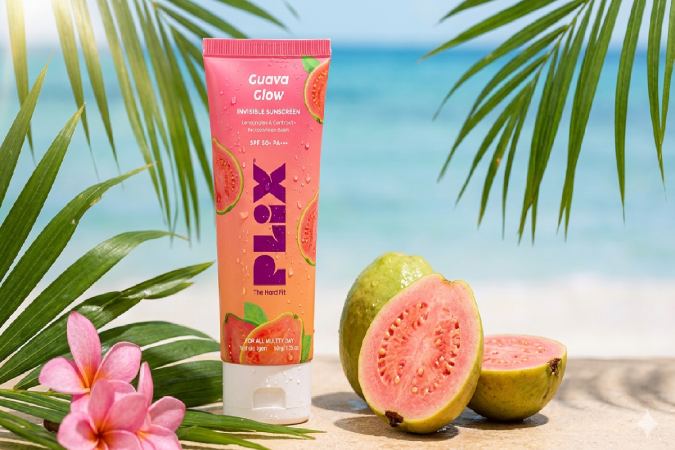
Product 1 — Plix Guava Glow Invisible Sunscreen SPF 50+ PA+++
Who It’s For
The Guava Glow is Plix’s bestseller and the most-recommended option for oily and combination skin types. It’s built for the person who has been skipping SPF because every formula they’ve tried leaves a greasy film by 10 a.m., casts them white in photos, or breaks them out within a week.
If that sounds familiar, the Guava Glow is the variant most likely to change your relationship with sunscreen. It is also the go-to recommendation for medium-to-deep Indian skin tones where white cast is a persistent dealbreaker.
Key Ingredients
UV Filters:
Ethylhexyl Methoxycinnamate — one of the most widely used chemical UVB absorbers globally; well-tolerated across skin types; handles the bulk of SPF-rating contribution in this formula.
Zinc Oxide — a physical/mineral filter covering both UVA and UVB wavelengths; contributes to the PA+++ rating; kept at a moderate concentration to avoid the chalky, white-cast effect that high-zinc formulas create.
Suncat DE (Encapsulated UV Filters) — this is what separates the Guava Glow technically from older-generation sunscreens. Suncat DE uses microencapsulation technology to encase UV filters in tiny spheres, which improves photostability (the filters last longer under sun exposure) and significantly reduces the heavy, greasy skin feel of traditional chemical sunscreens. Some manufacturers also associate
encapsulated filter systems with blue light protection claims.
Active Skincare Ingredients:
Guava Extract — guava is exceptionally high in antioxidants: Vitamin C, lycopene, and quercetin. In a sunscreen context, antioxidants are genuinely useful — they neutralise the free radical damage that UV radiation triggers even after filters have done their work. Think of them as a second line of photoprotective defence.
Ceramide 11 — ceramides are lipid molecules naturally present in the skin barrier. They fill the gaps between skin cells, preventing moisture loss and keeping external irritants out. Including Ceramide 11 in a sunscreen is thoughtful formulation — applying SPF daily can disrupt barrier function in some skin types, and having ceramide built into the formula counters that effect proactively.
Vitamin C — a brightening antioxidant that works synergistically with guava extract. Daily application contributes to a gradual luminosity effect and enhances the formula’s free radical neutralisation.
Texture and Finish
A lightweight gel-lotion that absorbs quickly into skin, leaving a clean matte-to-satin finish with no visible residue. Users across NC30–NC45+ skin tones consistently report zero white cast — the formula’s signature achievement, made possible by the chemical-filter-dominant approach and Suncat DE encapsulation.
It layers cleanly under makeup without pilling when applied as the final skincare step. In Indian summer humidity, it doesn’t slide or break down into a shine by mid-morning.
Pros and Cons
Pros:
- Genuinely lightweight — performs well through Indian summer heat and humidity
- Zero white cast, confirmed by users across medium-to-deep skin tones
- Ceramide 11 adds barrier-repair function not found in sunscreens at this price
- Layers cleanly under foundation, BB cream, and tinted moisturiser
- Pleasant, subtle fruity scent — not medicinal or sunscreen-like
- Vegan, cruelty-free, PETA-approved, dermatologist-tested
- Encapsulated UV filters improve photostability and comfort
Cons:
- PA+++ rather than PA++++ — the other three Plix variants offer PA++++ UVA protection; if hyperpigmentation or deep UVA protection is your priority, this is a meaningful difference
- 50g is a small volume for daily face + neck coverage at the correct two-finger application amount
- Contains fragrance (fruit-derived) — a potential irritant for reactive or sensitised skin
- Minor pilling can occur when layered over heavy occlusive moisturisers — test your layering combination first
Best For
Oily skin, combination skin, daily city wear, under-makeup SPF, medium-to-deep skin tones concerned about white cast, skin with a compromised barrier needing Ceramide support, users transitioning from no-sunscreen to daily SPF habits.
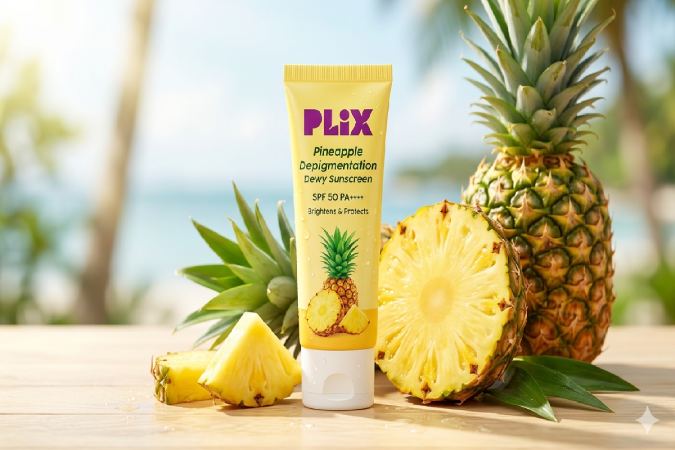
Product 2 — Plix Pineapple Depigmentation Dewy Sunscreen SPF 50 PA++++
Who It’s For
This variant is purpose-built for one of the most common skin concerns in India: uneven skin tone, hyperpigmentation, post-acne dark marks, and sun-induced dullness. If brightening is your primary goal and you currently maintain a separate Vitamin C serum, niacinamide serum, or dark spot treatment, the Pineapple Dewy consolidates that work into your daily SPF step.
It’s best suited to dry, dull, and normal skin. The richer, dewy finish is genuinely flattering on skin that lacks natural luminosity.
Key Ingredients
UV Filters:
Avobenzone — a broad-spectrum UVA absorber and one of the most effective chemical UVA filters available in cosmetic formulations. Its presence is a technical strength here — UVA rays are the primary driver of hyperpigmentation and photoageing, so using a dedicated, effective UVA filter is directly relevant to this variant’s depigmentation claims.
Ethylhexyl Methoxycinnamate — UVB filter; same role as in the Guava Glow.
Octocrylene — a UVB filter that plays a second important role: it stabilises Avobenzone. Avobenzone degrades rapidly in sunlight when used alone, reducing its effectiveness over the day. Octocrylene counteracts this degradation — these two are consistently paired in high-quality formulations for exactly this reason.
Active Skincare Ingredients:
Pineapple Extract (Bromelain) — Bromelain is a proteolytic enzyme naturally found in pineapple. At cosmetic concentrations, it provides gentle surface exfoliation by accelerating the breakdown of dead skin cells. This enhances cell turnover and, over consistent use, contributes to fading of pigmented marks. It is mild enough for daily use in a leave-on product at typical extract concentrations.
Niacinamide (Vitamin B3) — arguably the most well-researched brightening ingredient in modern skincare. Its mechanisms are well-documented: it inhibits the transfer of melanosomes (melanin-containing granules) from melanocytes to keratinocytes, which is the direct cellular process behind dark spots forming. It also minimises pore appearance, reduces sebum production, and has anti-inflammatory properties. Including 2%+ Niacinamide in a daily-wear sunscreen is a practical way to keep the ingredient consistently applied to the skin.
Alpha Arbutin (2%) — a tyrosinase inhibitor. Tyrosinase is the enzyme that triggers melanin production in response to UV exposure, inflammation, or hormonal stimulation. By inhibiting it, Alpha Arbutin reduces new pigmentation at the source. At 2%, this is a clinically meaningful concentration — the same level found in dedicated Alpha Arbutin serums sold separately at higher price points.
The trio of Bromelain + Niacinamide + Alpha Arbutin creates a genuinely multi-pathway depigmentation action. This is not marketing language — each ingredient targets a different stage of the pigmentation process.
Texture and Finish
Richer and creamier than the Guava Glow, with a dewy, luminous finish. For dry or dull skin that lacks natural radiance, this finish is its biggest asset. For oily skin, it is too heavy — the dewy effect can intensify over the day and potentially exacerbate congestion.
Pros and Cons
Pros:
- PA++++ rating — the highest UVA protection tier; highly relevant given UVA’s role in driving the hyperpigmentation this variant targets
- Active depigmentation stack at meaningful concentrations (Niacinamide + 2% Alpha Arbutin + Bromelain enzyme)
- Replaces the need for a separate brightening serum in morning routines
- Beautiful, glowing finish for dry and dull skin
- Avobenzone + Octocrylene pairing provides photostable, robust UVA coverage
Cons:
- Eye stinging is the most documented user complaint — Avobenzone and Octocrylene can migrate toward the eye area during sweating in humid weather; apply carefully and avoid the immediate orbital zone; if stinging is severe, switch to a mineral-forward formula for the under-eye area
- The dewy finish will exacerbate shine and potentially trigger breakouts on oily or acne-prone skin — not recommended for these types
- Fruit fragrance (pineapple) can irritate sensitive or sensitised skin
- Not recommended for skin with an actively compromised or inflamed barrier
Best For
Dry skin, dull and uneven skin tone, post-acne hyperpigmentation, sun spots, normal skin, users who want a consolidated brightening + protection routine in one step.
Product 3 — Plix Watermelon Protect & Hydrate Sunscreen SPF 50 PA++++
Who It’s For
The Watermelon variant is the most universally wearable of the four — designed to suit all skin types with hydration as its defining function. It bridges the gap between the mattifying Guava Glow and the richer Pineapple Dewy, landing at a balanced, natural finish that works year-round.
If you want a single effective morning product that provides SPF 50 PA++++ protection, adequate hydration, and a clean natural finish without a specific treatment goal, the Watermelon is the most straightforward recommendation.

Key Ingredients
Watermelon Extract — watermelon fruit is rich in citrulline, lycopene, and natural sugars. Citrulline is an amino acid that supports the skin’s own moisture-retention mechanisms and reinforces barrier function. Lycopene is a potent antioxidant in the carotenoid family — it provides photoprotective antioxidant activity that complements the chemical UV filters. Together, they make watermelon extract genuinely functional in a sunscreen base, not just cosmetically pleasant.
Hyaluronic Acid — a humectant that attracts and retains moisture from the environment and deeper skin layers. In a serum-milk consistency sunscreen, HA provides the lightweight hydration that prevents tight, dry skin after application without adding the heaviness of occlusive moisturisers. Ideal for skin that needs water-based hydration but not oil-based emollience.
Vitamin C — antioxidant brightening; provides free radical neutralisation alongside UV filter protection; contributes a gradual radiance benefit with consistent daily use.
UV Protection: SPF 50 PA++++ — matching the Pineapple and Jamun variants for the highest UVA protection tier in the range.
Texture and Finish
A serum-milk consistency — lighter than a traditional lotion but more substantial than a water gel. The finish is natural and balanced: neither mattifying nor overtly dewy. Most users across all skin types find it comfortable in both hot humid months and cooler, drier seasons.
Pros and Cons
Pros:
- Most versatile formula in the Plix range — works across all skin types and seasons
- PA++++ — superior UVA coverage
- Hyaluronic Acid makes it a practical moisturiser substitute in hot weather, reducing morning routine steps
- Comfortable serum-milk texture sits well under makeup without disrupting dry skin’s moisture balance
- Gentler user experience than the Pineapple — lower risk of eye stinging
- Best option for beginners who want an effective everyday SPF without specific treatment goals
Cons:
- Less targeted than the Guava (for oily skin) or Pineapple (for pigmentation) — if you have a specific skin concern, one of those variants will serve it more directly
- Hyaluronic Acid performs best in humid environments; in dry air-conditioned settings it can draw moisture from the skin if the formula lacks supporting occlusives — a consideration for office workers in heavily air-conditioned spaces
- Slightly higher price point than the Guava Glow
- Still contains fragrance — not suitable for confirmed fragrance-reactive skin
Best For
All skin types, beginners to daily SPF, combination skin that falls between the Guava and Pineapple targets, those in humid or mixed climates, users in air-conditioned environments needing comfortable hydration, those who want one fewer product in their morning routine.
Product 4 — Plix Jamun Acne Control Sunscreen SPF 50 PA++++ (Unique Section)
Who It’s For
The Jamun variant fills a gap that is genuinely underserved in the Indian sunscreen market: a daily SPF formulated specifically for acne-prone and congested skin that not only avoids making breakouts worse — but actively contributes to clearing them.
Most “non-comedogenic” sunscreens make passive claims about not clogging pores. The Jamun goes further: it uses active acne-fighting ingredients — Salicylic Acid and Jamun extract — as functional components of the formula. This makes it the only product in the Plix range (and one of very few Indian sunscreens at this price) that functions as a targeted treatment for congested skin while providing broad-spectrum PA++++ protection.

Key Ingredients
UV Protection: SPF 50 PA++++ — matches the Pineapple and Watermelon for the highest UVA protection tier.
Jamun (Indian Blackberry / Syzygium cumini) Extract — Jamun is deeply embedded in Indian traditional medicine for its astringent, antimicrobial, and anti-inflammatory properties. In skincare, Jamun extract is rich in anthocyanins and tannins — compounds that reduce sebum secretion, tighten the appearance of pores, and create a mildly antibacterial environment on the skin surface. Using an ingredient that Indian consumers already have cultural familiarity with, backed by relevant science, is smart formulation.
Salicylic Acid (0.1%) — Salicylic Acid is a Beta Hydroxy Acid (BHA) that is oil-soluble. Unlike water-soluble AHAs (like glycolic or lactic acid) that work on the skin surface, BHA penetrates into the pore lining and dissolves the sebum and dead cell debris that causes congestion and blackheads. At 0.1%, the concentration is calibrated for daily wear — strong enough to provide ongoing pore-clearing benefit over consistent use, mild enough to avoid the excessive dryness or peeling that higher concentrations can cause. This is the correct approach for a leave-on, daily-use product.
Niacinamide — present across all Plix variants; here, its sebum-regulation and anti-inflammatory properties are directly relevant to acne-prone skin. Niacinamide reduces the overactive oil production that contributes to clogged pores and breakouts, while its anti-inflammatory action calms the redness and irritation of active acne lesions.
The Jamun extract + Salicylic Acid + Niacinamide combination represents a genuinely thought-out formula for congested skin — not a cosmetically rebranded sunscreen with token ingredient additions.
Texture and Finish
Lightweight and mattifying — designed to feel similar to the Guava Glow but with the acne-active stack integrated. The Salicylic Acid and Jamun tannins contribute to a balanced, controlled finish appropriate for oily and congestion-prone skin. It does not feel medicated or heavy.
Pros and Cons
Pros:
- PA++++ — the highest UVA protection tier in the Plix range; critical for acne-prone skin where post-inflammatory hyperpigmentation is a constant secondary concern
- Salicylic Acid built into the SPF is genuinely rare at this price point in India — this is the variant’s strongest commercial and functional differentiator
- Ongoing low-level BHA exposure helps keep pores clearer with daily consistent use
- Jamun extract provides astringent and antimicrobial function relevant to oily, congested skin
- Niacinamide supports sebum regulation and reduces acne inflammation
- Matte finish appropriate for oily skin
- Vegan, cruelty-free, dermatologist-tested
Cons:
- Salicylic Acid at 0.1% is deliberately mild — it is not a replacement for a dedicated BHA exfoliant (like a 2% SA toner or cleanser) if you have significant active cystic acne; consider it a maintenance and prevention tool, not a treatment for severe acne
- Not recommended for dry, dehydrated, sensitised, or compromised skin — the BHA activity and mattifying finish can further deplete moisture in these types
- Fragrance (jamun) may not suit all preferences; sensitive skin types should patch test
- Same 50g volume limitation as the rest of the range — small for daily face and neck use
Best For
Oily skin with active acne or prone to breakouts, congested skin with clogged pores and blackheads, post-acne-prone skin needing ongoing pore management, users who want BHA activity built into their daily sunscreen step without adding a separate exfoliant to their morning routine.
Skin Type Matcher: Which Plix Sunscreen Should You Buy?
| Your Skin Type / Primary Concern | Best Plix Sunscreen | Key Reason |
| Oily skin, no breakouts | Guava Glow | Lightest texture, matte finish, Ceramide barrier support |
| Oily skin with acne / congested pores | Jamun | Salicylic Acid + Niacinamide + Jamun astringent action |
| Combination skin, balanced | Guava Glow or Watermelon | Guava for oilier zones; Watermelon if T-zone + cheeks vary |
| Dry or dehydrated skin | Watermelon or Pineapple | HA-rich Watermelon for pure hydration; Pineapple if dullness is also a concern |
| Dull skin / hyperpigmentation / dark spots | Pineapple | Niacinamide + Alpha Arbutin 2% + Bromelain triple depigmentation |
| Post-acne marks + oily skin | Jamun | Prevents new congestion while Niacinamide works on existing marks |
| Normal skin, no specific concern | Watermelon | Most balanced and universally wearable |
| Sensitive skin (mild) | Guava Glow with patch test | Gentlest formula — but fragrance present in all variants |
| Deeper skin tones / white cast concern | Guava Glow | Consistently praised as truly invisible on NC35–NC45+ |
| Beginners to daily SPF | Watermelon | Comfortable, universal, low learning curve |
Plix Sunscreen vs. Competitors
| Brand | Product | Avg. Price (50ml) | SPF / PA | Standout Edge |
| Plix Guava Glow | Invisible SPF 50+ | ₹399–₹549 | PA+++ | Ceramide 11 + zero white cast + lightest feel |
| Plix Jamun | Acne Control SPF 50 | ₹449–₹599 | PA++++ | Only affordable daily SPF with Salicylic Acid built in |
| Minimalist | Sunscreen SPF 50 | ₹399–₹549 | PA++++ | Fragrance-free, highly photostable UV filters |
| Dot & Key | UV Sense SPF 50 | ₹595–₹795 | PA+++ | Blue light protection, glow-focused branding |
| Re’equil Hybrid | SPF 50 PA++++ | ₹525 | PA++++ | Clean-ingredient formulation, fewer additives |
| La Shield | SPF 40 PA+++ | ₹450–₹550 | PA+++ | Dermatologist-brand positioning, sensitive skin |
| Neutrogena Ultra Sheer | SPF 50+ | ₹799–₹999 | PA+++ | Helioplex photostabilisation, heavy outdoor use |
Where Plix wins: The integration of clinically relevant skincare actives (Ceramide, Alpha Arbutin, Salicylic Acid, Niacinamide) at accessible price points. The Jamun variant is the most unique product in this comparison — no other brand at this price point offers a daily SPF with Salicylic Acid embedded. The Guava Glow’s white-cast performance and Ceramide content makes it competitive with formulas priced significantly higher.
Where competitors edge ahead: Minimalist and Re’equil offer fragrance-free formulations — a meaningful advantage for reactive, sensitised, or barrier-compromised skin types. Minimalist’s UV filter selection is technically more photostable in some configurations. If zero-fragrance is your non-negotiable, Plix’s current range doesn’t accommodate that.
Conclusion – Plix Sunscreen
For most Indian consumers — especially those with oily, acne-prone, or pigmentation-affected skin — the Plix sunscreen range delivers on its core promise. These are not just SPF products with fruit marketing; the active ingredients are real, the concentrations are relevant, and the formulations are genuinely suited to Indian skin tones and climate conditions.
Related Beauty and Personal-Care Guides
Sunscreen is one part of a broader personal-care routine. For ideas on coordinating everyday skincare and grooming, read these beauty routine tips for the face, eyes, and hair.
For readers researching hair-restoration procedures and possible complications, this guide to failed hair transplants and related considerations covers a separate hair-care topic.
If you’re also exploring cosmetic procedures, this overview of rhinoplasty and what to consider before a nose job provides related information about facial aesthetics and surgical planning.