

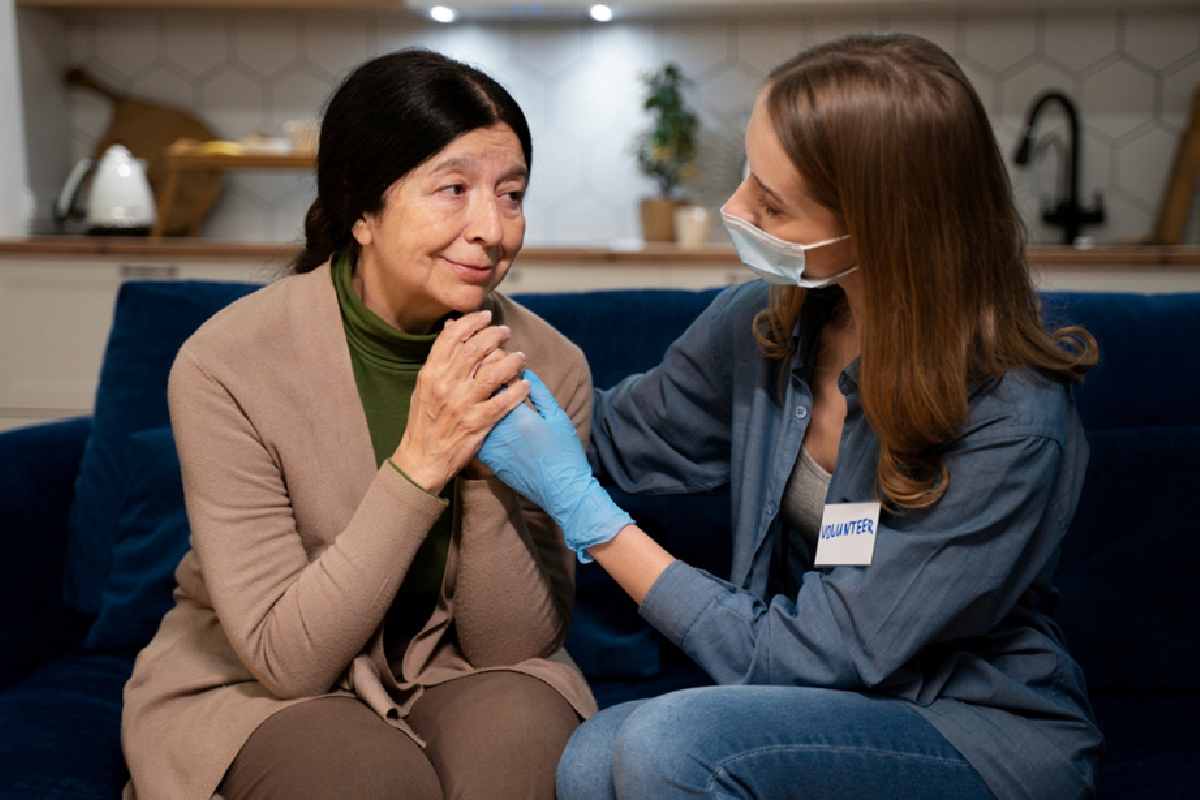
Professional Caregivers Spot Problems . We see our aging parents through the lens of years and decades of knowing them. A daughter who sees her mother every weekend may not notice when her mother starts moving through her house more slowly than she used to. A son who speaks to his father three times a week isn’t likely to notice if his father has begun asking the same questions over and over again. All of those little changes can be missed when you only see someone every once in a while and when your mental image of that person memorized every wrinkle and every quirk.
Professional caregivers come into the picture with fresh eyes and trained observations. They are looking for certain things that indicate change, danger or cognitive decline. More importantly, they know what’s normal about aging, and what indicates an issue worth attending to. That training and experience helps them to catch issues before they morph into medical emergencies.
Table of Contents
Training Alters How Caregivers See Everything
Most family members have never been trained in detecting changes that may signal an issue. They’re trained to see “big problems.” A fall, a bad cold, illness, unexpected weight loss; these issues are recognizable to everyone. The subtle beginnings of a problem can be hard to identify unless the issue has advanced to a major point.
Professional caregivers are trained in what early signs of issues look like. For instance, they understand that increased confusion in the late afternoon for seniors can often indicate the beginnings of a urinary tract infection rather than simple fatigue from a long day. A professional caregiver will also be concerned if a senior seems to be transferring from sitting to standing slightly differently as that signals that their arthritis (or other condition) has progressed enough that they may be at risk of falling if they aren’t helped.
A high quality Senior Care Agency PA trains their professional caregivers on these types of changes, allowing them to create documentation about their clients that demonstrates patterns in their behavior over time that can be addressed now rather than later. This results in better care options.
This training also involves understanding what side effects certain medications may create for seniors, identifying depression, recognizing changes in the skin that may indicate issues with circulation rather than benign changes, and dozens of other specific traits related to what to look for.
Seeing the Senior Everyday Counts
The difference between seeing someone every day, versus every week or once a month is enormous. The weekly visitor believes everything is ok because their aging parent looks more or less the same as they did the week before. The caregiver, however, notices that on Tuesday, the senior was a little more confused than usual, then on Wednesday the senior didn’t have as big of an appetite, and by Friday the senior is starting to come down with a fever.
These tiny details that occur from day to day can be easily missed by those visiting their loved ones every week but holding on to the memories from years and decades ago. Family members who stop by every week do not see the bad days or negative patterns. Ideally, professional caregivers see their client at their best and at their worst over months if not years.
Professional caregivers also see seniors around the same time every day. This impacts cognitive decline and changes in mood. Someone may be sharp as a tack when their daughter shows up at 10am, but by 2pm they might be noticeably more confused and agitated. Caregivers are trained in preventing “sundowning”, which is increased confusion late in the afternoon/early evening hours, allowing them to see patterns in their clients behavior that family members might miss.
Experience Creates an Eye for Pattern Recognition
A caregiver who has cared for hundreds or thousands of seniors will know instinctively what’s concerning and what isn’t. They have seen what changes in appetite can lead to long-term issues down the road, and what tiny changes in personality can reveal to be a medication issue rather than early onset dementia.
This experience is difficult to bottle or weigh, but invaluable when it comes to caregivers noticing things that family members might otherwise miss. When the caregiver reports to the family that “something is off today” it cannot be ignored. They have seen the same scenario play out hundreds of times before even if they may not know exactly what is wrong. This experience comes in handy when investigating what could be wrong with the senior in need of professional assistance.
Family members, however devoted, do not have this resource at their disposal.
Emotional Disconnect Means Members See More Objectively
A daughter might not want to admit that her dad is changing and becoming more forgetful. The fact that the son is changing is sad, and an uncomfortable truth to digest for many family members. A husband who has been married for 50 years is unlikely to notice concerning behavior that he needs to take to the doctor for intervention because it’s difficult for him to digest that his wife isn’t the same person she was 20 years ago.
Professional caregivers do not have this emotional history clouding their judgment. They report what they see with the intent of seeing what’s best for the senior citizen in need of assistance. This is not cold or unkind; it’s seen through the lens of wanting to see the best for the person receiving care.
Professional caregivers are also more likely to have difficult conversations with seniors in need of assistance who have clients about what they’ve been seeing or noticing, whereas family members likely want to avoid this scenario at all costs for fear of someone getting their feelings hurt.
Professional caregivers want to keep the senior citizen in need of assistance safe, and if a conversation or change in dynamic needs to occur to accomplish this goal, so be it.
Documentation Establishes Patterns
One of the most significant advantages professional caregivers have over family caregivers is documentation. Caregivers will actively make note of things like mood changes throughout the day, compliance with medications, and anything else that seems out of place.
When a doctor asks “when did these symptoms start” most family members do not have an answer for the doctor other than “I noticed when it began to get worse”. This does little to give the doctor context as they search for a way forward for the patient.
Caregivers make note of these seemingly small details as they happen. They understand the importance of these details and often apply it to the questions they are asked when accompanying the citizen in need of assistance. Caregivers completing routine documentation allow us to record the existence of patterns over time that can be used to judge what has been happening behind the patients back but might become alarming once people start noticing it first-hand.
This can prove invaluable when bringing another senior to see a doctor.
Communication Between Doctor, Caregivers and Family Members
Professional caregivers can also communicate between the family regarding issues they have noted that needs attention from doctors or emergency room staff. Caregivers are better trained in communicating with doctors without the “emotion lens” often clouds family members perspectives as they try to communicate with the doctors about their client who has aged over decades.
Professional caregivers use medical terminology that they have interpreted from their client’s actions over time. Family members may not possess these terms with family members they have known and loved for decades without the same conditions or medicines used by the senior needing assistance.
Caregivers will also note how the client is improving (or not) and communicate that information directly to the medical professionals on their healing journey.
Everyone ages differently, and someone’s decline may present in completely different degrees and ways than what other people may be experiencing even if the conditions and medications are more benign and normalizing than concerning.
When Professional Assistance Makes All The Difference
The value of having someone professionally trained to keep an eye on seniors needing assistance becomes abundantly clear once we see how professional caregivers stop certain issues before they become emergencies. It’s professional caregivers who kept one client safe by alerting them when they finally began looking like they were developing congestive heart failure instead of noting slight and benign foot swelling from old age and a long-standing medical condition. Yet, they contacted a medical professional before it was too late for them to receive treatment.
It’s also professional caregivers who notice when someone’s patterns are shifting when they are more tired than normal but is potentially mildly depressed after trying to adjust to the loss of the love of their life even if it’s been decades since anyone could show up to his (or her) birthday parties needing medication.
Having professional caregivers assist our seniors does not detract from family members needing to care for them; it merely adds another layer of support to ensure our seniors needing assistance retain their independence at home.