
Table of Contents
What is a Vegan Diet?
Vegan diet refers to vegetarian diet with no animal product like meat, dairy, eggs, honey, and gelatin. It gives emphasis to consumption of fruits, vegetables, grains, nuts, seeds and legumes in order to achieve complete nutrition. The veganism diffuses to the fashion choices, which do not involve using animals as testing or clothing, in comparison to vegetarianism.
It was a widely used technique because it has potential health advantages, attitude towards animal rights, and less environmental impact. The whole world has been experiencing the growth of veganism with millions of individuals becoming vegan or becoming vegetarian.
Types of Vegan Diet
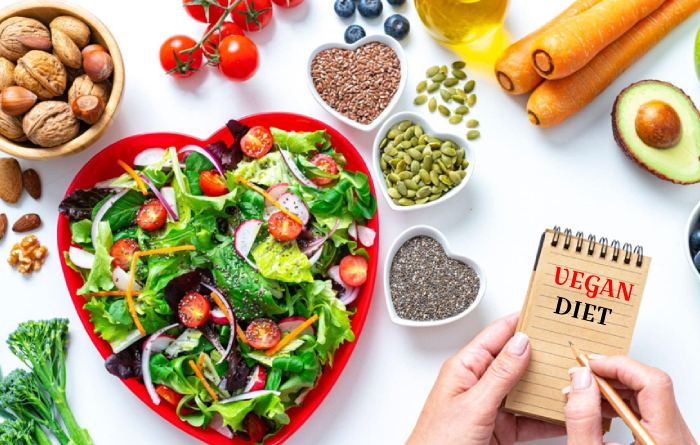
Vegan diets vary to suit preferences, health goals, or restrictions. Here’s a breakdown:
| Type | Description | Best For | Drawbacks |
| Whole-Food Vegan | Prioritizes unprocessed plants like veggies, fruits, whole grains, and legumes. | Long-term health, weight management. | Requires cooking skills. |
| Raw Vegan | Foods heated below 118°F (48°C), mostly raw produce and sprouted grains. | Detox, enzyme retention claims. | Harder nutrient absorption; risk of bacteria. |
| High-Carb Low-Fat (HCLF) | Fruit-heavy, starch-based like potatoes and rice; minimal oils/nuts. | Athletes, blood sugar control. | May lack healthy fats. |
| Junk Vegan | Processed vegan foods like chips, sodas, fake meats. | Easy transition for beginners. | Poor nutrition; high calories. |
| Flexitarian (Semi-Vegan) | Mostly vegan with occasional animal products. | Beginners easing in. | Less strict benefits. |
These types allow customization while staying animal-free.
Planning a Healthy Vegan Diet
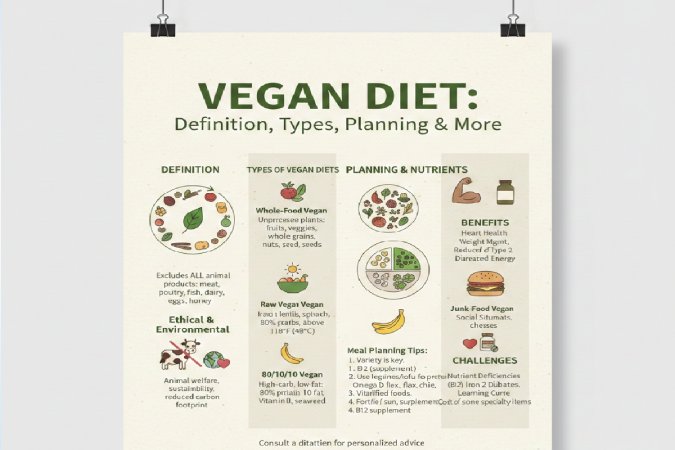
To optimize a vegan diet, prioritize nutrient-dense plant foods like fruits, vegetables, legumes, nuts, and whole grains while limiting refined sugars and processed items. Consulting a registered dietitian can simplify meal planning, especially since vegan diets require strategic attention to key nutrients like B12 and calcium.
Also keep in mind the more preventive your diet is the more difficult it will be to get all the nutritional factors that you need. Pure vegan diets lack natural B12 sources, so fortified foods or supplements are essential. Dark leafy greens (kale, collards, broccoli) provide calcium when consumed generously, alongside fortified plant milks and tofu.
To make sure that everything your body requires is done, it is necessary to pay certain attention to the following nutrients:
Calcium and vitamin D
Calcium helps in building and maintaining of strong bones and teeth. The most valuable calcium is that of milk and its derivatives. However, the dark green leafy vegetables, such as currants, cabbage vegetables, and broccoli (green cauliflower) are desirable plants when eaten in high quantities. The other sources are rich and calcium fortifying ones like juices, breakfast cereals, soy milk, and tofu.
The vitamin D is also highly active in the wellness of the bones. Cow milk and some brands of rice milk and soy as well as some breakfast cereal and margarine are fortified with vitamin D. Be sure to read food labels.
How to Plan a Vegan Diet: Step-by-Step
Planning ensures balance. Follow these steps:
- Assess Needs: Calculate calories (e.g., 2000-2500 daily for adults) via apps like Cronometer. Target 45-65% carbs, 20-30% fats, 10-35% protein from plants.
- Stock Staples: Buy oats, lentils, tofu, quinoa, nuts, leafy greens, berries. Budget: $50-80/week for one.
- Build Meals: Breakfast—smoothie (spinach, banana, almond milk). Lunch—chickpea salad. Dinner—stir-fried tempeh with broccoli. Snacks—apple with peanut butter.
- Supplement Smart: Daily B12 (250 mcg), optional D3, iodine from seaweed.
- Track and Adjust: Weekly bloodwork first year; tweak for energy dips.
Sample 1-Day 2000-Calorie Plan:
| Meal | Foods | Calories | Macros |
| Breakfast | Oatmeal + berries + flaxseeds | 400 | 60g C, 10g P, 15g F |
| Lunch | Lentil soup + quinoa salad | 500 | 70g C, 20g P, 10g F |
| Dinner | Tofu stir-fry + brown rice + veggies | 600 | 80g C, 25g P, 20g F |
| Snacks | Nuts + fruit | 500 | 50g C, 15g P, 30g F |
Total: Balanced, nutrient-dense.
Recommended Amounts for Each Food Group
An integrated vegetarian diet A vegetarian diet remains based on plant foods that include vegetables, fruits, grains, seeds, nuts, peas, and dry legumes,[4] and the following is an explanation of the integrated vegetarian diet: The recommended amounts for each food group can cover all the needs of the body.
Of nutrients when following a vegetarian diet; By diversifying the foods consumed and eating the appropriate quantities of them to protect the body’s caloric needs, by following the recommendations of food groups according to age, gender, and level of physical activity. Zinc, iron, and vitamin B12.
Diversification in the Plant System
Diversification in the consumption of foods is necessary when following a vegetarian diet; Where some nutrients are initiate in small quantities in plant sources, or the body absorbs them less quickly than those available in meat or fish, and contrary to what is predictable, most vegetarians get adequate amounts of protein and calcium found in milk products.
Still, if a vegetarian diet remains tracked without proper planning, consulting a nutritionist or a doctor, the level of consumption of some essential nutrients may be less than the amount that the body needs from them. These elements include; Iron and vitamin B12.
Hence the vegetarian diet is known as abstaining from eating one or more types of animal origin, especially meat. It has many health benefits; For example: reducing the risk of contracting some diseases.
Conclusion:
A vegan diet contains no animal products with various ethics and health (or environmental) implications. The most common ones are whole-food, raw, and flexitarian; balanced macros plan, meal prep, and nutrient tests such as B12. Perfect weight-saving and cardiac but requires planning so as not to cause deficiencies.